Showing posts with label adinath. Show all posts

Thursday, 14 May 2015

A Prayer for Nepal


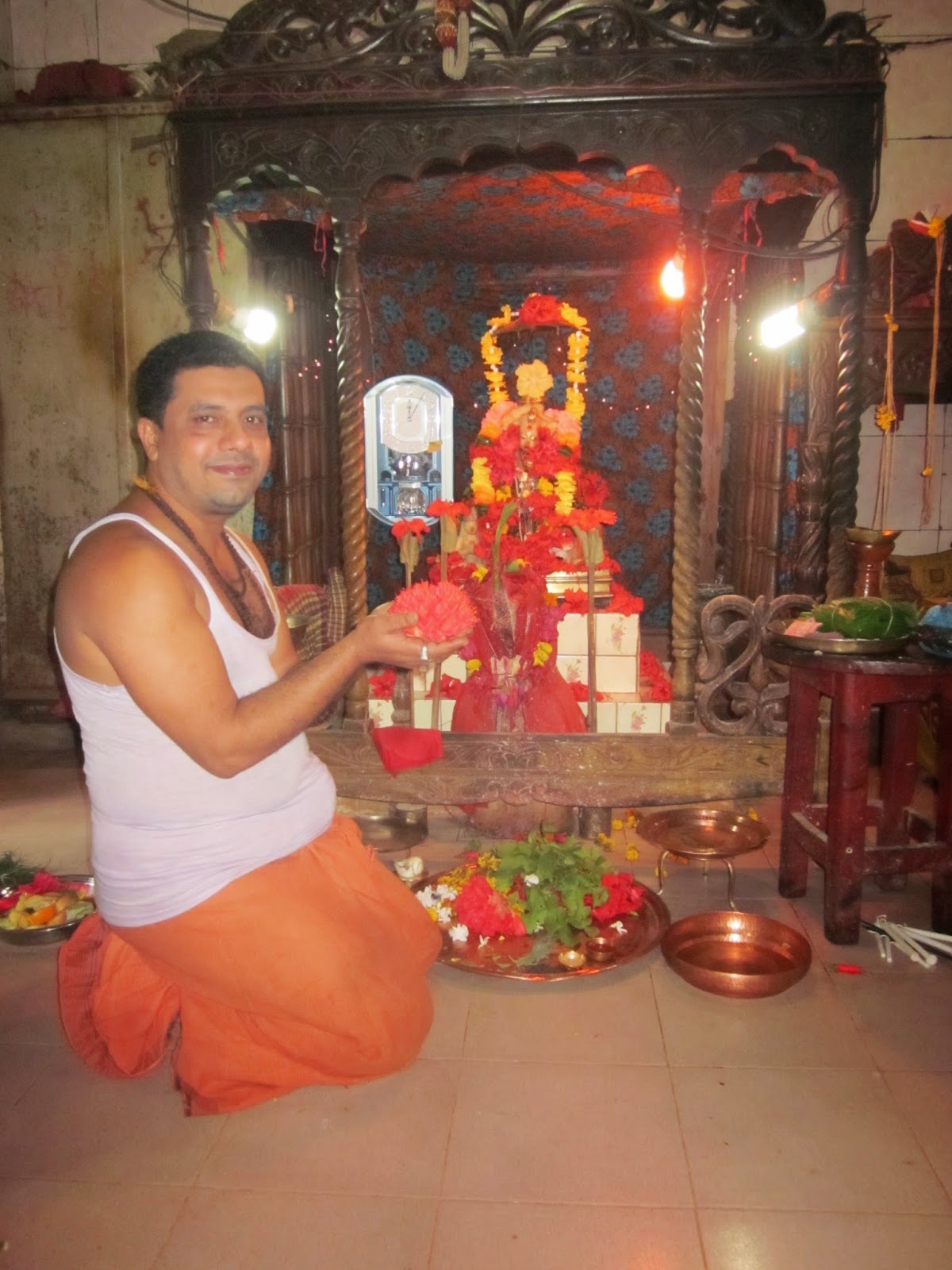
Devotion at the Sree Sree Adinath Temple in Moheshkhali during the Shiva Choturdoshi festival held each Falgun month.
Moheshkhali's unique hilly terrain.


Unique among Bangladeshi islands for its hilly terrain, Moheshkhali in Cox’s Bazar is assumed to have separated from the mainland some centuries ago. It is recorded that Moheshkhali Channel, dividing island from mainland, first arose in 1559 as the result of a devastating cyclone coupled by a powerful earthquake.


Moheshkhali’s hills are essentially the most seaward extension of the Chittagong Hill Tracts, a part of a range linked through northeast India to the Himalayas; and it’s not solely this geography, nor a history of earthquakes, that ultimately joins Moheshkhali to Nepal. There is a spiritual connection.

The Sree Sree Adinath Temple, Little Moheshkhali.


Atop Mainak Hill in Little Moheshkhali Union, with sweeping views across the interior, the channel and mainland, Sree Sree Adinath Temple has attracted pilgrims for centuries. It is said to be the site where Ravan, primary antagonist of the Ramayana, set down a sacred Shiva Linga stone he had promised Lord Shiva to carry uninterrupted from Kailash to Lanka in return for being granted immortality.

In Moheshkhali efforts failed him and the Shiva Linga remained there. But the story of the temple's beginning is not the origin of the connection with Nepal. Rather it stems from the experience of a solvent Moheshkhali Muslim named Noor Mohammad Shikdar.

The Shiva Linga.


Trouble began when one of Shikdar’s cows suddenly stopped giving milk. At first he blamed his cowherd who in turn sought to discover the cause of the matter. The cowherd watched the cow one night, to find that during the dark hours it left the barn and made its way to the Shiva Linga where milk began to instantaneously flow over the black stone. Only when the flow of milk stopped did the cow return to the cowshed.

Shikdar did not, however, believe the cowherd’s narration of events; until he had a dream to tell Moheshkhali’s Hindu zamindar landlord to build a temple at the site.


In a subsequent dream, in 1612, Shikdar was ordered to steal a protima statue of Lord Shiva from the Nepal State Temple to place on Mainak Hill. To complete the task he assigned one Naga Sannyasi who was, unfortunately, caught in the act. On the night before his trial however, the Sannyasi found favour with Lord Shiva who appeared before him, advising that he simply tell the truth and answer the judge’s trial questions calmly.


 It is said the protima was brought by Nepal's king, fulfilling the divine wishes of Lord Shiva.

On the following day the judge asked the colour of the protima. While the King of Nepal replied that the statue was a touchstone colour, the Sannyasi said it was white. As the latter answer was correct it was understood the Sannyasi had divine blessing in his task. As such, the Nepalese king asked forgiveness and on his own initiative arranged for the protima to be brought to Mainak and with due honour.

Inside the shrine.


Since that time the Adinath Temple that has become an icon of Moheshkhali Island has been honoured by the Nepalese, with Nepal’s government continuing the tradition of providing grants, including recently, according to locals, to construct the impressive jetty below the hill adjacent to the channel which provides for easier temple access.

Pilgrims from near and far continue to seek out the temple every year, especially during the renowned two-week Shiva Choturdoshi festival each Falgun month, including pilgrims from Nepal. There it is common to tie string around tree branches in the temple grounds as a request for a blessing, with strings untied and puja performed once a divine blessing has been granted.

In recent days at Moheshkhali’s Adinath it would be as well to offer a prayer for Nepal, to ask for the blessing of a speedy recovery from the recent earthquake devastation, at a Bangladeshi place that’s spiritually connected to the Himalayan land. The strings of any such wish – let’s hope they can be soon untied.

Pilgrims at the Sree Sree Adinath Temple in Moheshkhali during the Shiva Choturdoshi festival held each Falgun month.
Pilgrims.


This article published in The Daily Star: Moheshkhali's Adinath: a prayer for Nepal


The Adinath Temple jetty.


The jetty.


Bangladeshis seem to have added a tea shop underneath the jetty. 

Adinath Temple jetty of an afternoon.


Passengers leaving the jetty.


From Moheshkhali, island of hills.


Friday, 8 May 2015

The Textile Seller of Moheshkhali


Liri, 40, likes to vary her sales pitch.

“Sometimes I invite the customer to look,” says Liri, 40, a small-time seller of clothing and textile items, explaining her sales strategy. “‘Bhai, this is homemade’, I will say, or, ‘This is pure cotton.’ If they’re convinced they might buy something.”

Liri with her goods.
At other times customers make purchases without her saying anything. It’s all a bit random. “It depends on luck,” she says.

But more than luck the ethnic Rakhine widow relies on a steady stream of passersby. Without them, there’s nobody to see her wares.

Business can guide us to a better future. Large businesses, at their best, offer employment, improved goods and services, and contribute to the national well-being. For the millions of small-scale enterprises across the country meanwhile, the goals are closer to home. For Liri, business is about survival.

The gate to Adinath Temple in Little Moheshkhali.
Inside the temple.


At about 9 a.m. each day she arrives at the steps leading to the famous Adinath Temple on Cox’s Bazar’s Moheshkhali Island. There, she unpacks her stock of shirts, two-piece suits, sheets and bed covers, setting up her stall among several others in readiness for the day’s trade. While some items are purchased on the open market others are bought from Rakhine weavers in Moheshkhali, and some Liri weaves herself. She took a Tk 50,000 loan this year to buy stock.


The temple steps, where Liri has her stall.


In a normal month profits reach Tk 3,000, enough to cover loan repayments and feed herself and her son, who works as a mechanic. The best profits, of up to Tk 5,000 for the month, are made during festivals when hundreds of visitors and pilgrims crowd the temple steps.

“When sales are good,” says Liri, “We eat fish with our rice. Now we are lucky to eat green chilli, vegetables and salt. Everyday I’m making a loss.”


The Rakhine textile sellers of Moheshkhali.


The current political turmoil means only a handful of visitors reach the temple daily. By that afternoon Liri had made no sales, and the on day before she sold just two items worth Tk. 400.

She says Bhagawan – God – is running her family these days.


Of course she’s hardly the only small entrepreneur to suffer. When you think of the initiative involved in establishing any business, of the courage it must take for people like Liri to embark on a venture, of the struggle to bring themselves just a little further out of the clutches of poverty, the current transport embargo is really a kick in the teeth. 


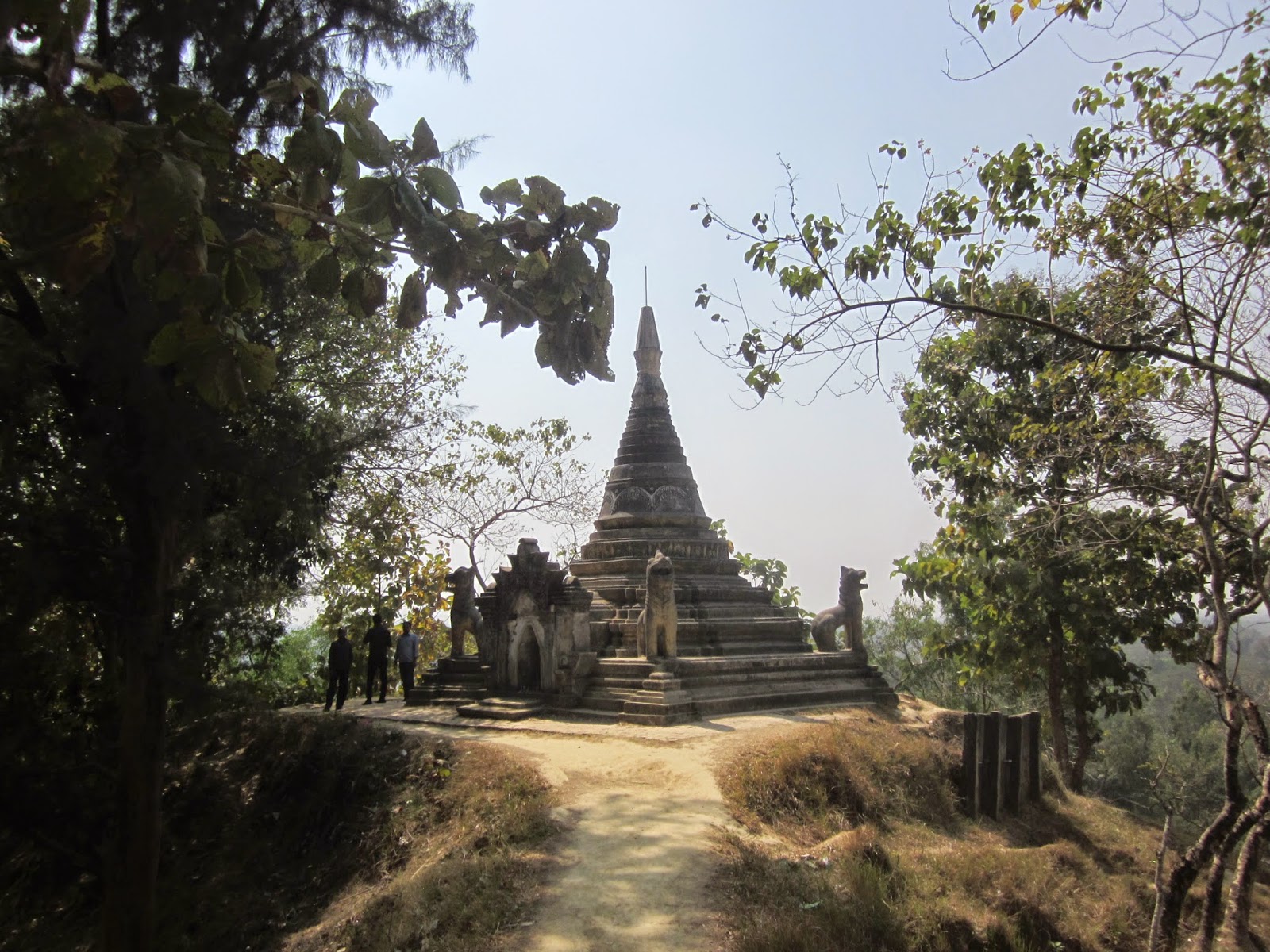
The Rakhine Buddhist stupa further up the hill from the Adinath Hindu Temple.
On guard at the stupa.


Stupa detail.

The lower Adinath gate.


This article published in The Daily Star, here: The Textile Seller of Moheshkhali

Liri hopes for better business times.

Friday, 17 April 2015

Our Moheshkhali

The future Moheshkhali, as imagined by Tanzina, Jahanara and Shaheda of Ghotibanga Govt. Primary School.
The British-era cemetery with primary school behind.


In the dry spring months Moheshkhali Island’s Ghotibanga Bazar takes on the appearance of a desert outpost, like a film set from a western genre movie – think John Wayne. It mightn’t have the tumbleweed but the dusty, sandy strip of tin shops adjacent to a windswept British-era cemetery is vaguely reminiscent of Hollywood’s American Wild West. You wouldn’t think the coast is nearby.

Overlooking the scene like a clichéd movie director instructing from his director’s chair is Ghotibanga Government Primary School, housed in a cyclone shelter. Surely nobody can introduce Moheshkhali to the newcomer as well as the island’s students can.


The year 8 students took to the task of drawing Moheshkhali with relish.

The school of one thousand students, nine teachers and two assistant teachers is in the process of making local history – it’s the island’s first primary school to adopt the government initiative of teaching up to class eight.

“The students are very eager to learn,” says English teacher Md Shohidullah. “They are productive, have lots of potential and too much curiosity.”

Armed with crayons and felt-tip pens I hope to ask the 48 class-eight students to draw their island: as it was, as it is and as it will be.

Tajmahal and Tahamina, both 13, have each included their house on either side of a tidal channel.
There's no lack of sharing skills in Ghotibanga


Art is included in the syllabus from class six but at remote Ghotibanga there’s no permanent art teacher so the students hardly ever draw. Nonetheless they prove more than willing to take up the challenge.

Students Tajmahal and Tahamina, both 13, at the nearest bench, set to work depicting contemporary Moheshkhali. Onto paper they outline the figures of banana and banyan trees, and a jubjar bush.

With southern Moheshkhali criss-crossed by tidal watercourses there’s a small river added and on each side of it they’re colouring a house for each of them, with the addition of a small nouka boat with which they might ferry the channel to visit each other.

I admire how easily they work together on the one picture. But to some degree Ghotibanga’s students are accustomed to making do.

Just as there are hardly enough pens and crayons to go around, according to Class 8 teacher Md. Jahedul Islam, 26, who has taught there for the last two years, the school suffers a shortage of low and high benches for students to sit at and the classrooms need new blackboards.

“We need ceiling fans too,” adds one student. It’s not difficult to imagine how true that must be when summer arrives.


Inside the classroom.
Pleased with artistic results.


I ask the girls what’s the best thing in Moheshkhali. “The betel leaf,” Tajmahal answers. Although sweet Moheshkhali betel leaf is famous to the degree that it’s the subject of songs, I’m surprised. “How do you know?” I ask. “Do you chew paan?”

“Our mothers and aunts chew it,” says Tahmina. “We live here, so we know.”

Meanwhile the boys are clustered around a bench to the right, beside the window. Md Sharif, 15, seems to naturally assume the position of group captain, confidently sketching a design in lead pencil, with colour added later. The boys are working on Moheshkhali’s past.

With the ubiquitous salt fields, bean vines and a nouka boat, the scenes of yesteryear are remarkably similar to the current day. There’s a farmer tilling soil, a hay bail and a cow. Perhaps the only feature that is really nearing its end is the foot-powered rice crusher, once familiar to villages across the country.

There are only 12 boys to 36 girls in class 8. 
“I like the shutki [dried fish] best,” Sharif says of his island, “We send it everywhere. It’s really tasty.”

Curious, I ask their teacher Islam why there are only twelve boys in the class, to thirty-six girls. “Many boys drop out after class 5 or 6,” he says, “Their families need them to work.” Sometimes this reality arises from poverty, but Moheshkhali is an island with a business focus – salt, fish and betel leaf. Education doesn’t always get its deserved priority.


The boys work together with Md. Sharif (2nd row, right) taking the lead.


Like many Bangladeshi primary schools, this one doubles as cyclone shelter.


In the classroom’s back corner, Sagorika, Ruposhi, Samira and Lovely, all 14 years old, are working on a drawing of the island’s icon: Adinath Temple. Their artwork features the nearby jetty, built by the Nepalese government for the temple that country also honours, the mangrove forests and a tiger – there may once have been a tiger kept on the temple grounds. There’s even a priest to attend the temple with the signature singular strands of hair coming from the top of his otherwise bald head.
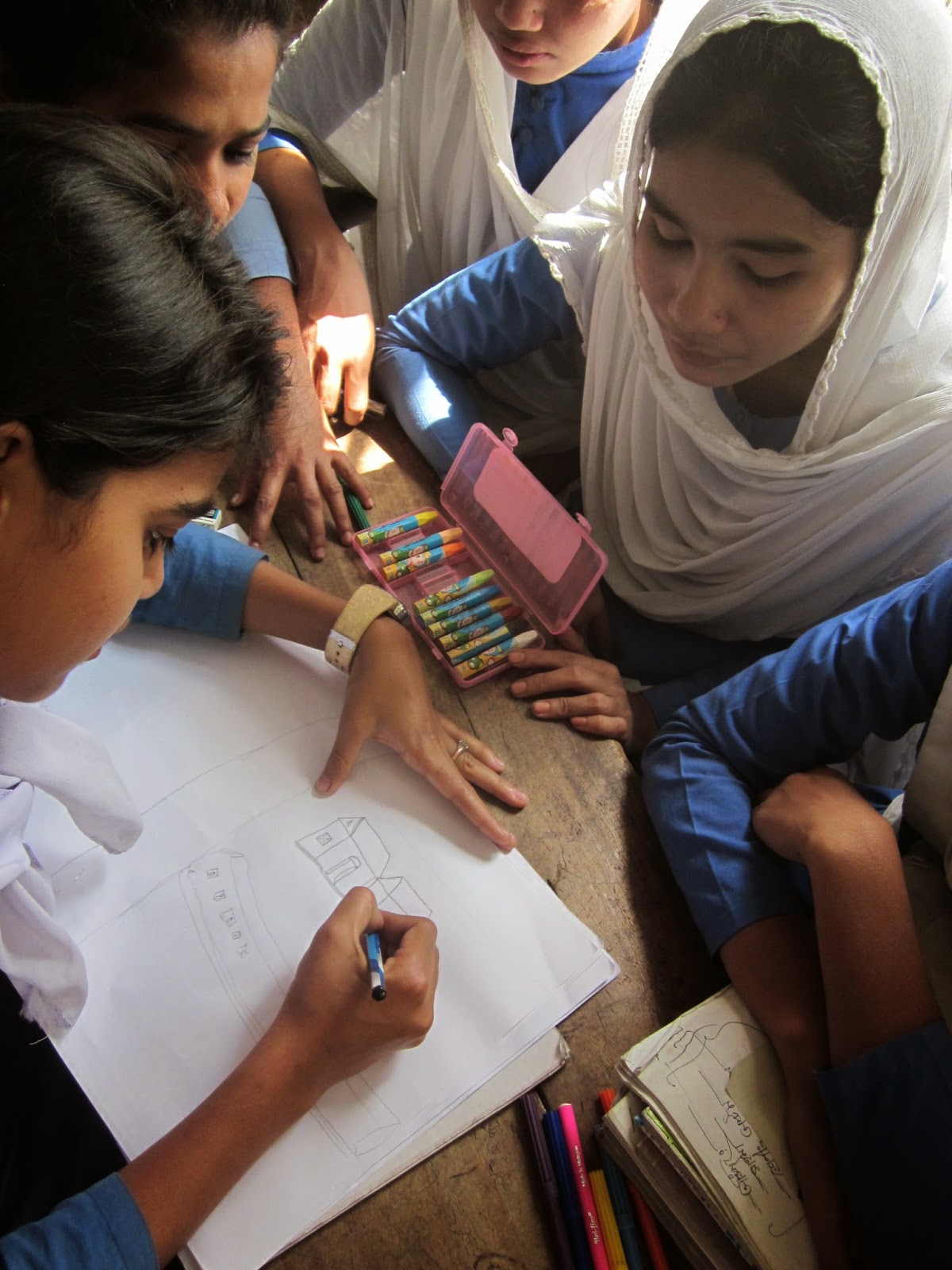


The novelty of drawing.


“It’s a beautiful area,” the girls tell me. “We were there the day before yesterday – and we saw you there!”

Nearby, Tanzina, Jahanara and Shaheda have been working on Moheshkhali’s future, demonstrating no lack of imagination. On one side of the page they’ve put a village – not much change – but on the other is a large town with a train service – something of an imagined Moheshkhali City.

The train seems far-fetched, I guess, but if the enthusiasm and dedication the Ghotibanga students have given to the task at hand are any indication, the possibilities for Moheshkhali’s future are bright.


Life as it used to be: Ghotibanga's class 8 boys illustrate.


Eucalyptus trees in the school yard.


This article is published in The Daily Star, here: Discovering Moheshkhali through Students' Art