|
| The view from Amtoli Para of Himchhari Beach and the Bay of Bengal. |
 |
| Amtoli Para, Himchhari. |
In the hilltop community of Amtoli Para in
Himchhari of Cox’s Bazar, 20 women from the 70 households are gathered on a mat.
With sweeping views down to the beach and across the Bay of Bengal the scene is
idyllic, suitable for a picnic if it wasn’t quite as hot. Below, along the
coast were once their permanent addresses, their homes, shops and gardens. Cows
grazed foreshore grasses; goats roamed.
The 1991 cyclone changed all that, proving
that a permanent address isn’t always permanent. In one respect the villagers
were lucky. Although the nearest cyclone shelter was 1.5 kilometres away nobody
died; and the worst of the cyclone was destined to be met elsewhere. But crops
were ruined; cattle and houses were swept away. With villages destroyed and
land no longer inhabitable they turned from the sea.
There was no choice but to move into the
sand-rock hills.
 |
| The track to Amtoli Para. |
 |
| Nurul Haque, 23, outside his home. |
Needing new livelihoods the villagers took
advantage of the only available resource: the trees of Himchhari National Park.
Still today they are primarily wood-cutter families and Nurul Haque, 23, originally
of Croalia village, is typical. The father-of-two ventures into the forest four
to five days per week, leaving at 9 a.m. to return by mid-afternoon. He walks
four kilometres to find trees, hauling fuel wood back to sell in Himchhari that
evening or on the following day. He earns a meagre 200 – 400 taka for one day’s
efforts.
“Wood cutting is painful,” says Ismat Ara
Sultana, 20, who, like most of the area’s women, pursues the same task as her
husband for about half his income, given the smaller loads she can carry and
her competing home duties.
It’s a livelihood that degrades the national
park and has caused the forest to shy away from the coast over the years,
exposing the area to even greater erosion risk.
But more recently the village women of
Amtoli Para have turned attention back towards an oceanic theme, in the form of
crocheting toy octopuses.
 |
| The women of Amtoli Para learning to crochet. |
 |
| It is hoped the women won't need to sell firewood anymore. |
From March 2015 the social enterprise
Hathay Bunano and the Chittagong-based NGO Community Development Centre, in
liaison with relevant government departments and under the auspices of the
Climate Resilience Ecosystems and Livelihood project, have begun implementing a
new project in the hope of finding sustainable livelihoods for the villagers while
better protecting the forest.
 |
| Crochet training in Amtoli Para, Himchhari. |
The project will teach 28 local women to crochet,
with guaranteed buyers of their toy octopuses and other items arranged abroad.
Their products will likely find homes in babies’ cots in the UK, USA, Australia
and South Korea.
“There will be 28 fewer pairs of hands
cutting wood,” says Livelihood Facilitator Ruma Majumder, “and that’s good news
for the forest.” With two months’ training, it’s hoped each woman may earn up
to 4,000 taka per month if she works full-time.
“I like it,” says Sultana, “Yes, there’ll
be some difficulties in learning the new skill but it will be okay.”
 |
| Amtoli Para. After the 1991 cyclone there was no choice but to move into the hills of the Himchhari National Park. |
 |
| The road from Amtoli Para to the beach. |
Unfortunately nearby Rohingya households
cannot be included for lack of residency rights. They will have no chance to
move out of forest harvesting.
With only a non-formal NGO school to rely
on, that currently teaches to class 5; in a place where few children study beyond
that due to the 25-taka transport cost to the nearest government primary school
proving prohibitive, basic entrepreneurial activities come with the hope of improved
opportunities, even where the household income rise is modest.
 |
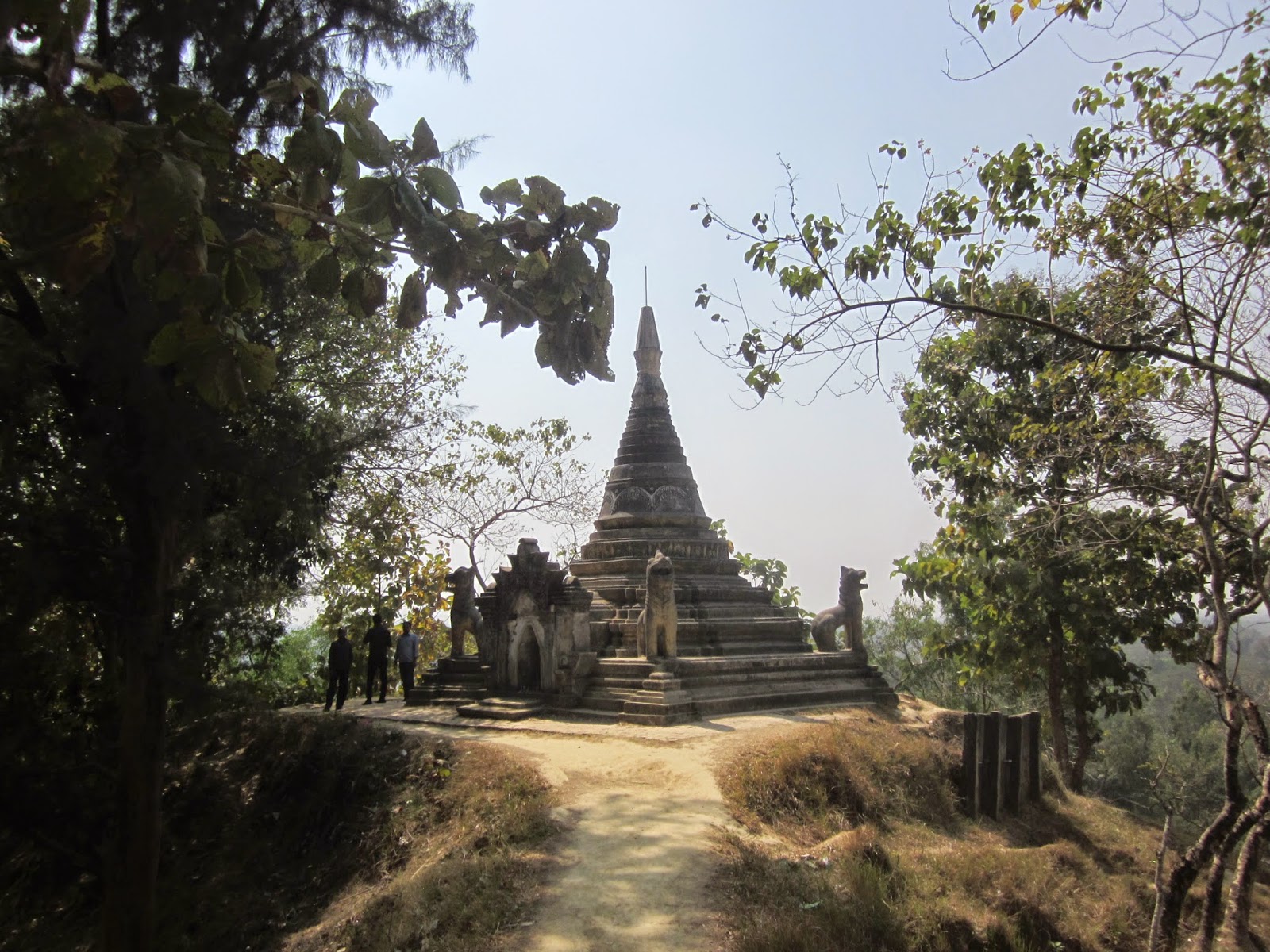
| Amtoli Para scenery. |
Through crocheting, through harnessing the
strength of the toy octopus, Amtoli Para’s women are set to better contribute
to finally overcoming the multigenerational consequences of the cyclone, to the
benefit of their families and the forest.
 |
| A house in Amtoli Para. |
 |
| New construction in Amtoli Para, Himchhari, Cox's Bazar. |
This article is published in The Daily Star, here: Harnessing the Strength of the Octopus in Himchhari
 |
| A lone tea shop in Amtoli Para. |