Showing posts with label fish. Show all posts

Thursday, 16 July 2015

The Quest for Eternal Life and a Large, Black Python


Away from daylight. Kudum cave, Whykeong, Teknaf.

A home in Harikhola village, Whykeong.


There once was a powerful Buddhist seer who lived in Myanmar, when it was called Burma in the time of the British. He was a simple fellow, anyone would say, except that with his eyes he could see the whole world at a time; but he was old, his power would soon be gone from the world. It was a pending reality that concerned him.


Seers have, of course, their own reasons for doing things; it’s not for ordinary folk to question why he decided to embark upon a journey precisely when he did. What we do know, what people say, is that his destination was the expansive estate of the landlord of Whykeong, nowadays in the north of Cox’s Bazar’s Teknaf upazila.

Harikhola Buddhist temple founded in 1903.


Pagoda rooftops in Harikhola.


More specifically the seer sought to visit a cave in the hilly terrain of the Teknaf Peninsula where, he had seen, there lived a porimei, a creature not dissimilar to a fairy.

Today that cave is called Kudum Cave and it lies within the Teknaf Game Reserve beyond the historical Chakma village of Harikhola with its 270 families.


Village pagoda.


One imagines Forest Beat Officer Abul Kalam, 43, was pleased for the company when he agreed to go with our small party to find the cave. He’s usually posted to remote Raykong Beat where he stays alone, at night, in the hills. “Twelve nights ago,” he says as a look of grave concern spreads across his face, “nine elephants came close to the bungalow.” I ask if it’s scary to stay alone in an isolated forest location and he says it is.

Drought stricken countryside.


In any case, in the British era the landlord, who was a Rakhine, presided over a great area of forest which is now the game reserve. He had six hundred buffaloes that he let run free.


Relaxing on the serang in Harikhola village.


Every year the landlord would order his cowboys to fetch some buffaloes from the forest, and it so happened that long before the seer arrived from Myanmar, one cowboy stumbled upon that cave and moreover, saw the porimei at its entrance.


Kudum Cave entrance.


“Son of man, come here!” said the porimei, “I have something to discuss.” The porimei then offered the cowboy a mohor, a gold medallion, on the promise that he wouldn’t tell anyone he had seen her there. The cowboy accepted the medallion and, returning to the landlord’s house, spoke nothing of the encounter.

It’s unclear how long it must’ve taken the cowboy to reach Harikhola from the main area of Whykeong Bazar but these days it’s a thirty-minute CNG ride through picturesque countryside.


Moni Sowpun Chakma, 37, entering Kudum cave near his village.

Village Buddhas.


It’s an attractive village with several Buddhist temples, called kyangs, including one dating from 1903 which features a large wooden bell and a monk from Myanmar who’s asleep after lunch. According to Moni Sowpun Chakma, 37, a villager who’s been working as a guide for the last decade, 1903 is probably when the first seven families arrived to settle, pursuing traditional slash-and-burn jhum agriculture. Many of their descendants still reside in Harikhola.


Pagoda.


Across the road from the kyang is a raised wooden platform called a serang, the perfect spot to rest out of the sun as long as one can climb onto it, up a log with basic ladder-like notches. Further inside the village on the crests of minor hills are several attractive ching ghar, pagodas.

A ching ghar, Harikhola.


Village Buddha image.


After consulting Birandan, 52, current headman of Harikhola, Chakma is ready to lead us on the twenty minute walk to the cave.

Many years back when the seer arrived in the area after crossing the Naf River he made his way to the landlord’s residence where he would stay as a guest. He took the opportunity to ask the landlord about the cave and the porimei he had seen with his powerful eyes; but the landlord said he knew nothing of either. The cowboy stayed silent.

However, on the following morning the cowboy relented, probably feeling it his duty to speak in good faith to his landlord’s guest or out of fear of the seer’s power; thus as the seer was taking his morning bath he confessed that he knew the cave and had seen the porimei as well. The seer asked the cowboy to accompany him to the spot.


Along the track to the cave. Forest bounty collected.


The track to the cave traces muddy overgrown gullies with high clay hills rising on either side. There’s a bit of jumping over streams required to get there and in front of its entry is a small pool that continues inside, to chest height depending on rainfall, into what presents itself as an endless tunnel.

“Nobody knows how deep the cave goes,” says Chakma, and Kudum means ‘long’ in Chakma language. “They say it runs right through the hills to the Bay of Bengal.” Others say the cave, unique for being of clay-mud rather than stone, is 38 metres in length.

He explains that far inside is a high cavern with a platform that can be reached by ladder. He says it’s not advisable to go that far since a large, black python inhabits the platform, descending into the front of the cave to feed on the several fish species in the pool.

When the cowboy and the seer reached the cave, the seer told the cowboy to wait outside the entrance to catch the porimei that he would chase out. “How do I catch a porimei?” asked the cowboy; and the seer gave him two handfuls of sand to throw at her.

The forest path to the cave.

When we reach the cave I would happily wait outside too but Chakma is already taking off his shirt to go inside. Cautiously we wade into the darkness, torches in hand and with a polythene bag over my head on account of the hundreds of bats inside who relieve themselves like rain.

A local shop in the village centre.


With the entrance but a sliver of sunlight behind us Chakma asks if we wish to go further. “The water ends shortly,” he says, “But beyond that, somewhere is the python.” I am more concerned that the python might be beneath us, in the water, looking for fish. So we head back.

We didn’t see the porimei but the cowboy did. As it tried to escape the seer, it flew out of the cave and the cowboy as instructed threw the sand at it. When the sand hit, the porimei transformed into a great tiger and ran off into the forest, the seer in pursuit. “They say the porimei was killed at Colemamarang, some distance from here,” says Chakma, “There’s a rock which looks like a girl fallen over that people say is the porimei turned to stone.” The seer meanwhile took the porimei’s eyes for eating as her eyes could do the one very thing that his couldn’t: grant eternal life.

“Doesn’t the python in the cave scare you?” I ask Chakma as we walk back to the village.

“No, but the wild elephants do. It’s easy to encounter them along this track.”


The return.


Back at the ching ghar.


This article is published in The Daily Star, here: Wading into Mysterious Kudum Cave


Me at the cave.


Friday, 17 April 2015

Our Moheshkhali

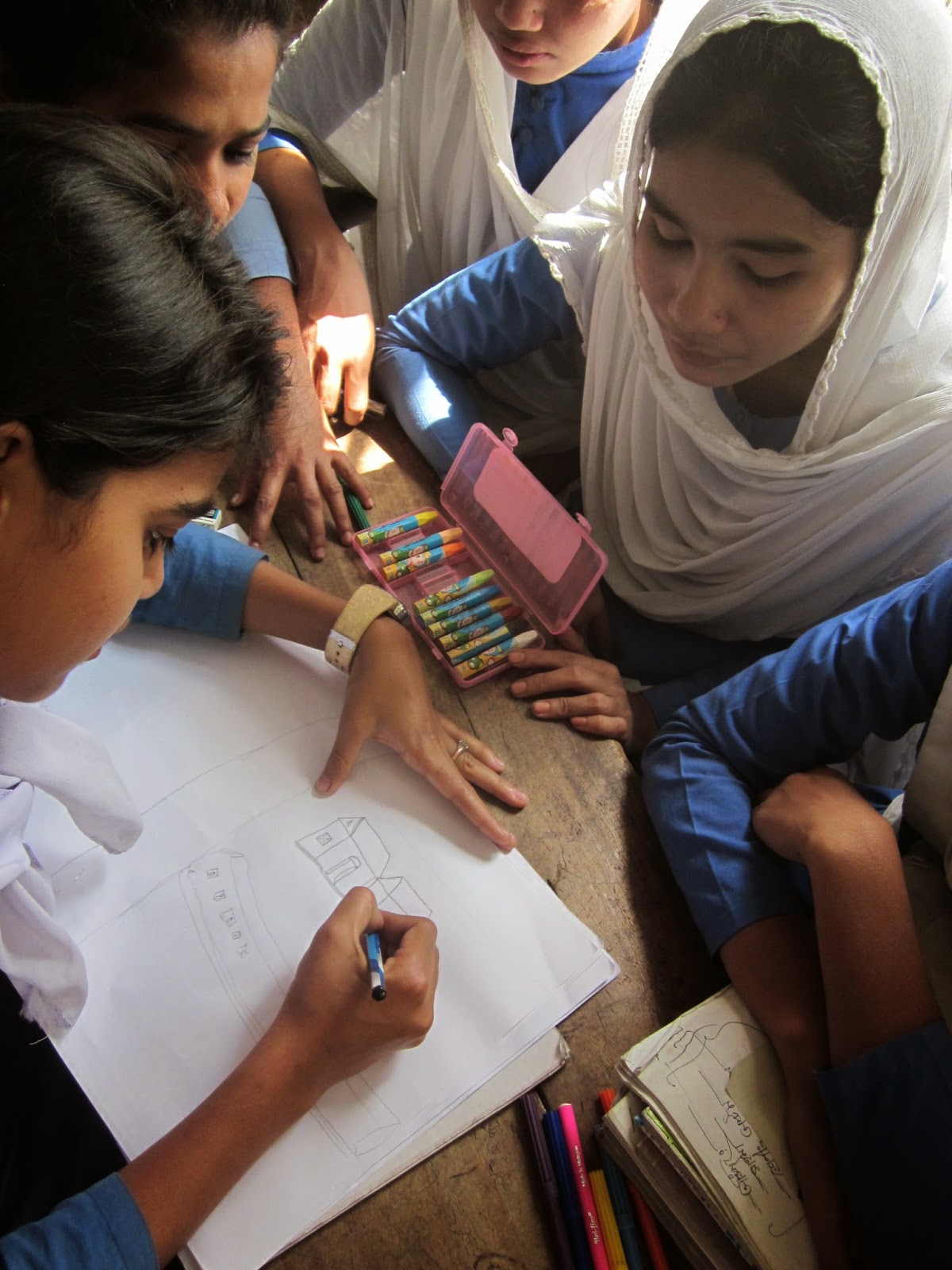
The future Moheshkhali, as imagined by Tanzina, Jahanara and Shaheda of Ghotibanga Govt. Primary School.
The British-era cemetery with primary school behind.


In the dry spring months Moheshkhali Island’s Ghotibanga Bazar takes on the appearance of a desert outpost, like a film set from a western genre movie – think John Wayne. It mightn’t have the tumbleweed but the dusty, sandy strip of tin shops adjacent to a windswept British-era cemetery is vaguely reminiscent of Hollywood’s American Wild West. You wouldn’t think the coast is nearby.

Overlooking the scene like a clichéd movie director instructing from his director’s chair is Ghotibanga Government Primary School, housed in a cyclone shelter. Surely nobody can introduce Moheshkhali to the newcomer as well as the island’s students can.


The year 8 students took to the task of drawing Moheshkhali with relish.

The school of one thousand students, nine teachers and two assistant teachers is in the process of making local history – it’s the island’s first primary school to adopt the government initiative of teaching up to class eight.

“The students are very eager to learn,” says English teacher Md Shohidullah. “They are productive, have lots of potential and too much curiosity.”

Armed with crayons and felt-tip pens I hope to ask the 48 class-eight students to draw their island: as it was, as it is and as it will be.

Tajmahal and Tahamina, both 13, have each included their house on either side of a tidal channel.
There's no lack of sharing skills in Ghotibanga


Art is included in the syllabus from class six but at remote Ghotibanga there’s no permanent art teacher so the students hardly ever draw. Nonetheless they prove more than willing to take up the challenge.

Students Tajmahal and Tahamina, both 13, at the nearest bench, set to work depicting contemporary Moheshkhali. Onto paper they outline the figures of banana and banyan trees, and a jubjar bush.

With southern Moheshkhali criss-crossed by tidal watercourses there’s a small river added and on each side of it they’re colouring a house for each of them, with the addition of a small nouka boat with which they might ferry the channel to visit each other.

I admire how easily they work together on the one picture. But to some degree Ghotibanga’s students are accustomed to making do.

Just as there are hardly enough pens and crayons to go around, according to Class 8 teacher Md. Jahedul Islam, 26, who has taught there for the last two years, the school suffers a shortage of low and high benches for students to sit at and the classrooms need new blackboards.

“We need ceiling fans too,” adds one student. It’s not difficult to imagine how true that must be when summer arrives.


Inside the classroom.
Pleased with artistic results.


I ask the girls what’s the best thing in Moheshkhali. “The betel leaf,” Tajmahal answers. Although sweet Moheshkhali betel leaf is famous to the degree that it’s the subject of songs, I’m surprised. “How do you know?” I ask. “Do you chew paan?”

“Our mothers and aunts chew it,” says Tahmina. “We live here, so we know.”

Meanwhile the boys are clustered around a bench to the right, beside the window. Md Sharif, 15, seems to naturally assume the position of group captain, confidently sketching a design in lead pencil, with colour added later. The boys are working on Moheshkhali’s past.

With the ubiquitous salt fields, bean vines and a nouka boat, the scenes of yesteryear are remarkably similar to the current day. There’s a farmer tilling soil, a hay bail and a cow. Perhaps the only feature that is really nearing its end is the foot-powered rice crusher, once familiar to villages across the country.

There are only 12 boys to 36 girls in class 8. 
“I like the shutki [dried fish] best,” Sharif says of his island, “We send it everywhere. It’s really tasty.”

Curious, I ask their teacher Islam why there are only twelve boys in the class, to thirty-six girls. “Many boys drop out after class 5 or 6,” he says, “Their families need them to work.” Sometimes this reality arises from poverty, but Moheshkhali is an island with a business focus – salt, fish and betel leaf. Education doesn’t always get its deserved priority.


The boys work together with Md. Sharif (2nd row, right) taking the lead.


Like many Bangladeshi primary schools, this one doubles as cyclone shelter.


In the classroom’s back corner, Sagorika, Ruposhi, Samira and Lovely, all 14 years old, are working on a drawing of the island’s icon: Adinath Temple. Their artwork features the nearby jetty, built by the Nepalese government for the temple that country also honours, the mangrove forests and a tiger – there may once have been a tiger kept on the temple grounds. There’s even a priest to attend the temple with the signature singular strands of hair coming from the top of his otherwise bald head.


The novelty of drawing.


“It’s a beautiful area,” the girls tell me. “We were there the day before yesterday – and we saw you there!”

Nearby, Tanzina, Jahanara and Shaheda have been working on Moheshkhali’s future, demonstrating no lack of imagination. On one side of the page they’ve put a village – not much change – but on the other is a large town with a train service – something of an imagined Moheshkhali City.

The train seems far-fetched, I guess, but if the enthusiasm and dedication the Ghotibanga students have given to the task at hand are any indication, the possibilities for Moheshkhali’s future are bright.


Life as it used to be: Ghotibanga's class 8 boys illustrate.


Eucalyptus trees in the school yard.


This article is published in The Daily Star, here: Discovering Moheshkhali through Students' Art

Saturday, 28 February 2015

Coal Street


Coal Street, Barapukuria Coal Mine, Parbatipur, Dinajpur.


Coconuts, jackfruit, fish, papaya and rice… there’s generosity to its geography. Bangladesh has a landscape that perpetually gives.

It’s the morning and I’m sitting in Saju’s living room. It’s not his Dinajpur Town residence but the old cottage in a row of old cottages at Phulbari’s Barapukuria Coal Mine: the place he calls home on workdays.

The housing strip is called the old staff barracks. It currently houses various employees unable to be accommodated elsewhere. Forty-three-year-old Md Shajiul Islam, Saju Bhai, is the mine’s assistant manager in the mechanical sector. He’s been working there for just short of eleven years.

The minor concrete laneway features cute front gardens of vines and fruit trees – papayas and mangoes – but the street has no name. Unimaginatively I’m calling it Coal Street.

Inside, from the thought-about check curtains, the spotless cane sofa set, the general order, you can tell Saju’s wife has been there. But she’s not there now – she’s in town. Breakfast is done and I’m sitting alone. Saju’s gone off somewhere, promising to be back soon.

It’s strange to be in Saju Bhai’s living room. For one thing there’s a guest house at Barapukuria, where the mine managers suggested I should stay. Foreigners usually do. There’s a club, a large pond and long tree-lined driveways – Barapukuria has those British-style trappings almost as though wishing it were a tea plantation.

But it’s better to stay in Coal Street. It’s more personal, more real.

The simple life in Coal Street.
It’s also strange to be there because I only met Saju a few days earlier. It was largely coincidental. Like many in Dinajpur I’d taken to spending at least a part of each evening at the enormous Boro Math – the colonial-era field not dissimilar to Kolkata’s Maidan. The Math is the town’s pride and wholly suitable for adda, the art of chatting.

Funnily enough we’d just been talking about how I might visit the mine when Saju arrived. It was Friday. He was home. Everything settled automatically and immediately, with no more effort than a ripened coconut falling. Hospitality is a second gravitational force in Bangladesh.

Unusually, as it happened I wasn’t at a total loss as to visiting the mine. A friend in Dhaka had seen on Facebook that I was in Dinajpur. He had a friend working at the mine – they’d once done a short IT course together and in Bangladesh any engagement that gets beyond a “hello, hi” holds significant risk, like a monsoon raincloud heavy and ready to burst, of becoming the start of a long friendship. My friend thought to ring me so I could meet his friend. It was only a matter of digging out the guy’s number.

I’d considered waiting but it all proved unnecessary and when I mentioned my friend’s friend’s name – Kamol Mollick, Saju said he was his next-door-neighbour.

Bangladesh is diverse and chaotic but somehow among the huge randomness of 160 million it’s often there’s some sort of contact or connection waiting nearby. It’s difficult to comprehend entirely how it works but there’s always that innate village-ness proximity lurking.

Saju Bhai.
Sitting in Saju’s living room I’m contemplating the previous evening – a small, strange thing in particular – a mobile phone charger. Off his own bat, Saju thought to enquire if my phone needed charging. When I said maybe it did, he sought the specific charger to fit. Someone on Coal Street had the right one.

It’s such a small thing but the charger seemed symbolic: the living room snacks before the dinner in the coal canteen (with apologies that Saju’s wife wasn’t there to provide a home-cooked main meal); the checking every detail for sleeping in the guest room – extra blanket on the side in case of cold snap, internet access… electronic repellent or mosquito net?

Bengali hospitality, is it culturally-genetically coded? There’s a genuine happiness from another’s happiness and comfort from the comfort of others. I’m wishing I could be more like that. I know for a fact I’d never think to ask a guest if their phone was alright.

I suppose I grew up in Australia. Much of Australia is ruggedly beautiful – there is hospitality too but it’s different. It arises more infrequently, less expectedly, from a harsh geography.

In between thoughts, a middle-aged woman with a round face and rounder body, in a pleasant green sari, wanders in off the street through the open door leading to the garage. I wait for her to say something but she doesn’t. She crosses the small living room right in front of me. I wonder if she’s a burglar. I wonder if I should disturb her at all, if, in Bangladesh, even a burglar might not expect to feel welcome.

Australian thinking cap on: it’s strange. Bangladeshi thinking cap on: it is as it is… and I’m smiling a Bangladeshi smile at the thought.

I’m slightly pleased when I see her open the fridge door. It’s surely not usual for thieves to primarily target refrigerated foodstuffs no matter what the cultural context. She seems to be loading various vegetables in her arms. She’s taking the lids off plastic containers in the freezer that might contain fish or meat.

I wait to see what happens next.

Arms fully loaded she turns back toward me and as she finally starts to speak I notice a few teeth missing. “Is your home far?” she says.

By this stage I’m almost certain she’s no criminal. What I don’t yet comprehend is that she’s cooking my lunch. She looks after Coal Street when wives are away. She leaves as unceremoniously as she entered.

Koi fish, shing fish, chengra fish, tiger fish, a not-sure-of-the-name fish and turtles… Kamol’s house next door features an aquarium and when I met him on the previous evening there was some talk of its inhabitants. He’s thirty-five, an assistant manager, electrical sector who was also batching that day – his wife on a home visit to Khulna. His twin girls normally tear around the little street, so I’m told. Coal Street must have been missing their noise.

Friend of friend equals friend… Friend of neighbour equals friend… I was doubly qualified and it was no small feat to persuade Kamol not to make tea. In any case, word had travelled Coal Street and there needed to be a visit across the road to Sattendra Barman’s house – he is also an assistant manager.

Friend of neighbour equals friend… Friend of friend of neighbour equals friend… With his wife at home, all hope of not having tea was lost.

She was once supposed to study in Australia but at the last minute she couldn’t go. It might have been good for her career but I wonder if it wasn’t a happy twist of fate.

I know, yes I know… Australia is the dream country, I hear it often. Yet it can only be from taking the little things – the important things – for granted; from assuming it all just continues on the other side of an ocean. Life in Bangladesh can be a struggle, of course… but Coal Street… who is it that would need to leave that? Big house, flashy car… what I’ve never properly understood: Why?

Later that morning I visit the mine. There are known-people to wave hello to as I do the rounds.

And afterwards there’s feedback from Mr Mollick via my friend in Dhaka. “I only wish I could have done more for him.” I should have let him make the tea.

Could the Bangladesh government perchance, or the Barapukuria Coal Mining Company perhaps, not send some foreign aid to Australia to teach Bangladeshi hospitality methods? I wonder. Feeling guilty: at my place will have to do better than coffee and biscuits… will need to think about other people’s mobile phone batteries.

Coconuts, jackfruit, fish, papaya and rice… sorry for distractions… I’m supposed to be writing about coal…


The distraction of Coal Street.


This article is published in Star Magazine, here: Coal Street

Friday, 11 April 2014

A Monsoon Living


The Patwari family fish trap assembly plant, in their household yard in Fulshore village, Narail.

Every year it’s awaited: that great transformation. The rattle of wind signals the first challenge as the dust of Boishakh month is kicked about. The bravest of the rain clouds will arrive as squalls to awaken sudden waves in the rivers, as if to man the first sentry posts and to let it be known a battle is pending.

Both men and women participate. Tal palm string is ready, at the right.
Yet into Jyoishtho month the summer holds strong, encircling every infantry march of cloud and routing each cavalry charge of rain. In those days of almost unbearable heat and sweat summer parades, head aloft, at its most proud and fierce. Defeat is unthinkable. No other power could ever rule the sky!

Feelings of invincibility, however, are most often weakness, so history says. It’s not less true for the summer. With Asharh month contemplating its entrance the thunder claps grow louder still, heralding the readiness of greater forces as the legions of restless grey clouds roll in. Summer’s defeat is fast and furious in the end, falling in buckets, through downpours lasting many days. At the time of the carnival of percussion, when the great drummer hammers his rhythm with abandon on every tin roof, summer is undone. The land is drenched, soaked and soothed. Long live the monsoon!

For us lesser creatures the world is rejuvenated. We notice as the rice paddies become minor seas and long dry canals start to sing with the chorus of frogs. Everywhere brown is left for the vitality of green. Dust turns into mud. We reach for our umbrellas again. And absolutely for fish, as for ducks and turtles, a once parched world has become a wonderland.

Making bamboo sticks, from which the fish traps will be constructed. 
It must be exciting for those fish: silvery puti and hungry-tasty shing, eel-like baim and cunning koi – for the minor crustaceans, the varieties of chingri too. There is the whole of that new watery world to explore.

In Fulshore village of Narail Sadar Thana, many generations have relied on that great transformation. Fifteen to twenty families in the village carry on with an ancient tradition of making fish traps perfect and ready for the monsoon’s reign. “Nobody can say who made this system,” says 40-year-old Shomir Patwari. “It was a long time ago.”

There are eight members of the extended family to sit about the yard of a day, men and women, each taking up a task of their choosing in the fish trap assembly line. It’s peaceful and industrious. There are bird sounds. There’s some Hindi song wafting across from a function down the road. All that’s required is perhaps a mat to sit on and a patch of shade. With fingers and knives the fish traps are made.

While their fish trap making tradition runs year-round of course, it’s a livelihood that’s a gift of the monsoon, ultimately, when fish traps are at their most useful, practically. And it’s a gift too of the several trees that populate that place and sustain the Patwaris’ tradition. The process starts with collecting tolla bamboo, as it’s locally called, explains Shomir’s younger brother Pollath Patwari, 30. The bamboo is cut into the thin strips that will make the trap.

Pollath Patwari creating tal twine that will hold the fish traps together.
Branches of the tal palm are also collected and soaked in the pond for a week before being dried for an hour in the sun. The tal branches are shredded into taler aash, the twine used to bind the trap together. With numerous knots the sticks are tied in line, then into the final box shape with its wavy pattern design that nobody could know the origins of. In one corner of the top is an emptying hole: through which the fisherman will remove his catch. The family can make two to three finished traps in a day, says Shomir.


A finished fish trap in the Patwari family yard. There is nobody to remember how the design was developed.

But in the past two to three years, he explains with a look of concern, circumstances have not favoured the family tradition. Where once bamboo was plentiful and cheap it has become rarer and more expensive. A rising bamboo purchase price has put a squeeze on fish trap profits.

Sometimes the Patwaris now sell their labour to supplement the family income but it’s not what they like to do. Making fish traps “is our regular work,” says Shomir, “That’s why we like it. If we go outside we don’t feel comfortable. It’s much nicer to do this work, to sell some traps and make some money this way.”

A Patwari fish trap is held together by tal twine and a myriad of knots.


Meanwhile behind the household yard is an impressive stand of bamboo which looks untouched. There must have been thought put into that: an as yet untapped insurance against even more difficult times.

People take the opportunity to enjoy that great transformation. They dance in the rain, jumping puddles or stay longer in bed reading books. In the season when the Patwari family fish trap manufacturing plant has relocated from yard to veranda, people brave the weather on a Thursday or Sunday to reach the market day of the Roopganj Bazar. Among innumerable other items there are fish traps to buy.

As a hobby for parent and child, perhaps for necessity or for recreation, all that’s required is to cut one or two bamboo sticks to make a little attractive hole through which the fish will swim inside. Then it’s all about placing the trap in the water somewhere. It’s all about waiting.

A Patwari fish trap with the small hole at the top for emptying the catch.
The monsoon world is a gift for those fish. For the puti, shing, baim and koi, for the varieties of chingri too, it must seem exciting with so many new places to explore and places to hide. The trouble is that the monsoon has gifted that living to the Patwaris too, and the new watery world of abundance comes complete, for little fish, with Patwari dangers.


By Shrabon month the monsoon is at its most proud and fierce. Defeat is unthinkable. No other power could ever rule the sky! But feelings of invincibility are most often weakness, so history says. And as the days pass, the storm clouds start to, surely enough, grow weary. Gradually the sky will become clear once more, tentatively at first, then gradually in stronger, longer doses. Long live autumn!

Creating tal twine in the Patwari's household yard.
Shomir Patwari.


This article is published in Star Magazine, here: A Monsoon Living

Friday, 21 March 2014

Fishing with Otters

Fishing with otters is an age old tradition.

An otter fishing boat beside Goalbari village.


By lunchtime it’s unmistakable: the sunshine is bringing new warmth to winter’s end. Water hyacinth lazily rides the currents on the offshoot of the Chitra River in Goalbari village of Narail. Along the riverbank wives have hung clothes to dry and below, where a muddy track leads to water’s edge several canoe-like boats are moored. It could be a pleasant scene from any fishing village except that as well as the boats Goalbari harbours a unique fishing tradition.

Lunchtime finds Bhoben Biswas, 35, aboard his narrow boat in front of his modest house. Sitting on haunches he’s sorting small fish. He’s not examining his catch but arranging a raw fish lunch for his Indian smooth-coated otters – called either udhbiral or bhodor in Bangla, and known as dhere in Narail.


Bhoben Biswas, 35, making a raw fish lunch for his otters.


Fishing with domesticated otters was a practice once found in several countries but is nowadays most probably restricted worldwide to southwest Bangladesh – more specifically to Mongla and Narail. As is still true for eight other Goalbari families – in a village of two hundred households – Biswas inherited this livelihood from his father who learnt from his father before him. Otter fishing has potentially been part of the small community for many centuries, but is in decline.

Biswas’s son has manoeuvred the boat onto the water at our request while his father spreads the fish onto a large metal feeding tray. At one end of the boat is a covered area where the customary crew of four somehow find sleeping place during extended fishing expeditions, while at the other is the long box of bamboo slats where the otters live.

The otters are also aware of tradition. They similarly learnt the art of fishing with humans from their parents and grandparents; and they know when it’s lunchtime. There’s a lot of shuffling inside the box. Tips of noses, claws and eager eyes are finding gaps between the slats; a shrill rat-like squealing challenges the Chitra’s tranquillity. The otters are ready.


The otters know when it's lunchtime.

Biswas's son helps his father.


Biswas signals his son. With the lid’s opening there’s a scramble of seven thick-coated furry bodies – an otter can weigh up to 11 kilograms – leaping up and out, with each body momentarily rainbow-arch-manoeuvred in a beeline to the fish feast on deck. Squealing stops as gorging begins.

His otters eat about five kilograms of fish per day which costs up to 400 taka. Presumably this is more burdensome on the budget when the troop is in their home port, because otters will eat crustaceans, insects and even small mammals – while on a fishing expedition keeping their bellies satisfied must be simpler.

“Some people are scared of them,” says Biswas, “but not me.” It mightn’t be easy to be scared of an otter from a distance, as they look storybook cute: but watching them eat with sharp gnawing teeth and mesmerising pink gums, seeing right into their throats as morsels of fish slide down, noting their ravenous manners, beady eyes and what may be a battle scar or two – it doesn’t inspire putting one’s hand between an otter and its lunch. Yet for their part they’re unaffected by the new human barely two feet away.

Biswas says all his otters are the same – he doesn’t have names for them. Perhaps they feel the same about their humans.


The otters waste no time in devouring their lunch.
Table manners are not the otters' strong point.


The team leaders – the adult otters, wear rope harnesses with Biswas’s son holding the other end. The younger otters remain free. It’s the system that’s used as the otters work, as they shepherd fish into the net attached to a long bamboo pole that’s currently rolled up and stored along one side of the boat. “They focus on the bamboo pole,” says Biswas, “and drive fish towards it.”

Like for all Bengalis the otters’ year begins on Pahela Boishakh, 14 April. It’s an important day that marks the embarkation in their motor-less boat for five months of fishing in the Sundarbans wilderness. “It takes two days to get there,” says Biswas, “but if we hang onto a trawler we arrive in one.”


Southwest Bangladesh is likely the only otter fishing place, worldwide.


The crew of four will spend five days at a stretch fishing the jungle river channels before heading to a nearby settlement to sell the catch. The crew cooks on a solar powered stove and drinking water lasting for several days is stored in a large urn. Fishing occurs at low tide, day or night.

“If we get fish we are happy,” says Biswas, “But when fish are few our stomachs aren’t full.” It’s a sentiment most likely shared with his otters.

During the fishing months it’s dacoity, robbery, which is the biggest problem. There’s not a lot of security on a quiet deep-jungle waterway. “Last Aasha month we were held hostage by bandits for twelve days,” Biswas recalls, “We had to pay a 10,000 taka ransom.”


Otter lunchtime.


It’s also difficult if the fish are few. “Once a whole month passed with no fish,” he says, “We had to take a loan to come home again.”

For the otters dangers include illness and crocodiles. According to Biswas an otter can live up to thirty years if there is no misadventure. And of course a problem for the otters is one for the humans and vice versa. It’s a joint venture arrangement that Biswas has pursued for the last fifteen years.

These are the types of concerns that hold sway over Biswas’s face. If he stopped to think he might take pride from pursuing an ancient tradition. He might enjoy the inherent adventure. But his thoughts are family-centred, on his wife Mira, their two sons and daughter, who must manage alone during the fishing months. The pride he seeks is providing for them and it’s when he says “The best thing is if the catch is good. Then we make lots of money and the family runs nicely,” that his face finally surrenders to a broad smile.


Enjoy their lunch, claws and all!


With the five months completed both humans and otters return home to Durga Puja. Afterwards they will leave for a shorter three-month expedition on the nearer rivers of Faridpur. There are few surprises in the otter-and-fisherman life cycle.

After lunch the otters head into their element – the water. “They like to take a drink,” says Biswas. They also play and scamper about the riverbank in search of things of otter-interest. It’s demonstrably apt that the English words ‘otter’ and ‘water’ stem from the same ancient root. A good half an hour later, Biswas calls “Ay! Ay! Ay!” to his otter team and they return to their bamboo home. But Biswas is in no rush to disrupt their play. It’s clear that despite the hardships he holds affection for his animal assistants.


On Pahela Boishakh they leave for the Sundarbans for five months.

Back at the house Mira expresses her hope that her son can run a shop. Biswas too wishes to see an end to the otter fishing for his family. “I hope my sons do not do it,” he says, “But the oldest one doesn’t study properly.” You see, even otter fishermen face that familiar problem – and one cannot but be in two minds upon hearing it. On the one hand, who could wish any student not to do well in their studies? On the other, it is regrettable to concede that before too long otter fishing might finally meet history’s relegation.

After lunch the otters enjoy a drink and a swim.

A brighter future might lie in tourism. The first-rate otter drawcard already lures a trickle of intrepid westerners to stay with local families for several days – perhaps inspired by the BBC documentary. But the sector is unorganised, and even were its potential realised, there is risk that otter fishing would become more entertainment than living tradition, as lucrative tourism taka displaced the drive for Sundarbans bravery.


Otter swimming in Goalbari, Narail.
The smooth coat glistens when in the water.


There's always time for a bit of play and banter.


Otters are in their element in the water.


Otters having river fun.
And onto the riverbank...


Exploring the riverbank.


After lunch play...


Finding otter things to do...


A young otter enjoying lunch.


From a distance, storybook cute.


This article is published in Star Magazine, here: Fishing with Otters


Otters learn fishing with humans from their parents and grandparents.
Too many photos! It's about putting one's foot down.