Showing posts with label family. Show all posts

Sunday, 22 February 2015

The Miraculous Dog


A boat on the Brahmaputra River.

An old well, Ghoraghat.
It was after evening when we sat in the living room ready for adda, a chat that could foreseeably last half the night. Zaharul Islam, 50, had just arrived in the city from his home in Dinajpur’s Ghoraghat. He found his way to my place from Gabtoli Bus Stand.

It’s ironic we spoke of it then – it was hardly the first topic – because well-after-evening is probably the time of day when people most readily consider those Islamic spirits called jinns. And yet, from Zaharul Bhai I was about to hear that a jinn can also arrive of an afternoon.

Before we go further… Of course I cannot attest to the veracity of what he described. It occurred when he was twelve years old. What I can say is that he was entirely serious in the telling.

It happened on a day in Falgun or Choitro month – the season of spring. The sun was hot enough for his uncle, with whom the young Zaharul was to travel to his maternal grandmother’s house, to carry an umbrella.

And the late Hafez Abdur Rahman was no ordinary uncle. Blind from birth, he was renowned for being spiritually gifted – he was considered a pir or a dervish. “In Ghoraghat we use the word aulia,” says Zaharul Bhai.

Early morning, Ghoraghat.


From childhood Zaharul’s uncle had been educated by a Maulavi from Noakhali. The parents hoped their blind son could memorise the holy Quran to become a Hafez, which village wisdom says assures one a place in heaven. Zaharul’s uncle studied for seventeen years. He was a good student.

“He didn’t only know the Quran,” says Zaharul, “He knew all the hadiths. Not only did he know the hadiths but he understood their meaning.”

“Planes, volcanoes, science…” says Zaharul, “How big is the world? Without the hadiths, who could understand?”

There are many stories about his uncle. “He could read palms,” says Zaharul, “telling people about a serious disease they’d suffered ten years before. He’d tell their futures, including when they’d die.”

Once, Zaharul’s uncle is said to have arrived home with his wife and after going inside, he told her they’d been robbed. The blind man described what was missing and where it had been placed; and he identified the thieves.

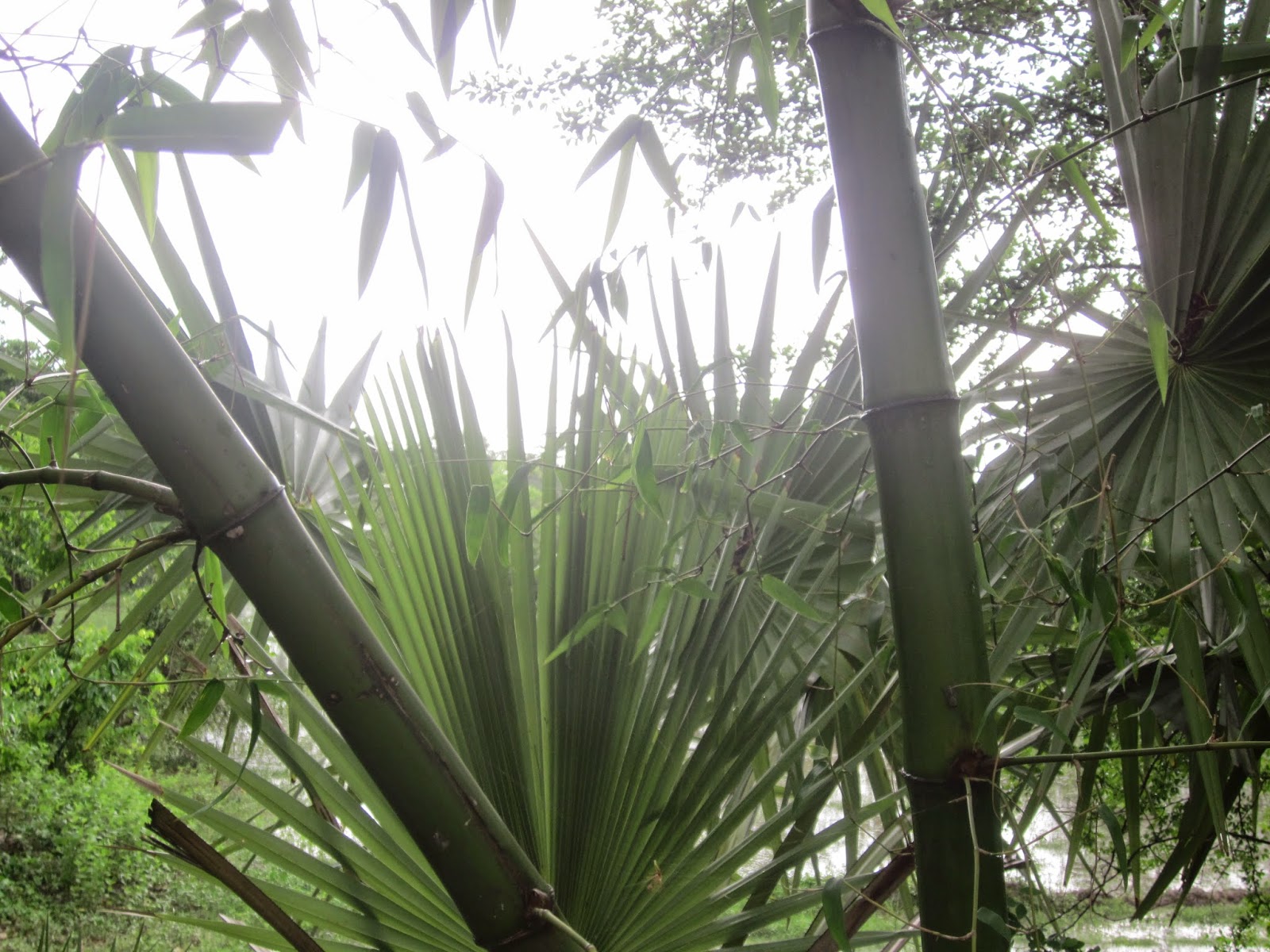
Another day, Zaharul remembers, the large stand of bamboo outside the house was behaving strangely. It was as though a large wind was passing, except there was no wind. Yet the large stalks were bending profusely until with a tap-tap-tap they hit and hit again the tin roof of the house. “The bamboo will be ruined!” said Zaharul’s father.

Ghoraghat, Dinajpur.
His uncle then called out, “Lalu… Kalu… Stop!” Suddenly the bamboo stood straight. There was no more tapping. The air was still. “He often called those names,” says Zaharul, “Nobody knew what they meant. But he said he could control jinns. On that day it seemed his jinns were making mischief.”

“My uncle had many followers. There was a retired major from Dhaka Cantonment – when my uncle died ten years ago the major offered a water buffalo for his chollisha,” says Zaharul, referring to the tradition of a deceased’s family providing food to the poor forty days after their relative’s demise. “The major gave many goats too.”

In the morning of the day when he was twelve, Zaharul set off, leading the blind man towards the house of Zaharul’s maternal grandparents – a house that sat on a shoal across a wide stretch of the Brahmaputra River, some 30 kilometres away in Gaibandha District.

They had reason to go. Zaharul had another uncle there, and that uncle’s wife was having trouble conceiving. She’d had three to four unsuccessful pregnancies and despite previous efforts by the late Hafez Abdur Rahman to help her, nothing worked.

“My aunt was very beautiful,” says Zaharul. “After we arrived, my blind uncle did some treatment.” He performed an exorcism. “Suddenly I heard my aunt shouting, ‘I will go! I will not stay here any longer! I will never come again!’” The jinn inside her, was pleading for mercy.

Zaharul’s uncle was serious. “No! You stayed here for long. You will not go.”

“When the jinn emerged, my uncle caught it and put it into a bottle,” says Zaharul. “I saw that! He buried the bottle. After that my aunt had a son followed by three daughters. One of them lives in Italy.”

Boat on a channel of the Brahmaputra.
By early afternoon it was time to leave, so uncle and nephew made their way back to the riverbank. In the morning it had been no problem but by afternoon the riverbank was deserted. There was not a single boatman waiting to ferry them across. “We could go to Phuphu’s house?” suggested the young Zaharul, knowing his paternal aunt’s house was nearby.

“No,” said his uncle. “We’ll cross the river, you’ll see!”

“After some time,” says Zaharul, “I heard a snorting sound. I saw a large dog come out of the bushes. The dog went to the water’s edge.”

“Did Kaloo come?” asked his uncle. “Don’t you see him?” The dog was in the river. He was very broad in the back and jet black. Only its head and back were above water.

His uncle told Zaharul to climb onto the dog’s back. “You must only look forward,” he told his nephew, “Don’t look around. Focus on the river’s far bank.” After Zaharul climbed aboard his uncle did the same.

“My uncle was speaking without sound,” says Zaharul. “It looked like he was reciting something.”

What happened next was remarkable. “At most,” Zaharul says, “within forty seconds we were on the other side. I hardly knew what happened. I was in ankle-deep water – it was clear, you could see everything – just beside the far bank.” The dog had vanished.

The twelve-year-old was terrified. He ran as fast as he could up the bank.

“Where are you, nephew?” his uncle was calling. “Come here! Come here!” After running some distance Zaharul stopped, and returned to his uncle. How else would the blind man find his way home? “Now, don’t tell your grandparents,” the late Hafez Abdur Rahman said.


This article published in Star Magazine, here: The Miraculous Dog


At the bank of a sand shoal in the Brahmaputra River.

Thursday, 8 January 2015

Work and Prayer


There are about 100 Oraon families in Borobila Village.


In the comfortable, spacious afternoon in the courtyard of Badol Minji’s house in Borobila village of Dinajpur’s Ghoraghat they’ve hastily arranged a table and chairs. Silver-haired Minji is a respected ex-local-member and renowned ex-president of the local indigenous association. Borobila is an Oraon village of one hundred families. Easily he takes his place near the table head. His daughter floats about showcasing the latest henna design to adorn her youthful hands.

Badol Minji with his daughter.
Minji’s presence carries natural dignity but it doesn’t radiate far. Nearby his wife Dulali Khalko is too animated to sit. She’s engaged in narrating the story of two brothers, her storytelling seeming to feed upon itself like a merrily boiling kettle. Her facial expressions tread the boards, spanning the spectrum of seriousness as she tries to recall each detail to ensure its safe delivery to its exact belonging-place in the sacred story. It’s mesmerising.

Beware: afternoons like the one at Badol Minji’s house carry risk. Bright and welcoming, they’re all too easy to get lost in.

According to the 1991 national census there were 11,296 Oraons scattered across Bangladesh’s northern districts. In Ghoraghat today there are up to 500.

Daram-Karam they call the story about the one brother who prayed while the other spent his days working. Life was good: the working brother’s toil produced more than enough food. With the other brother’s prayer the food was wholesome.

There are around 500 Oraons in Dinjapur's Ghoraghat.
But there came one day, Khalko narrates – the kettle sings – when the working brother noticed his brother performing puja around a branch of sacred kadam tree that he’d pushed into the ground. It must’ve been like any other day except that on that day it seemed the easier option. The working brother suddenly angered.

“I’m working the whole day in the field!” he complained, Khalko says, “You’re only doing puja!” With rage he took the kadam branch and threw it into the nearby river.


Dulali Khalko narrates the sacred story of two brothers.

While there is suggestion the Oraon are the Kurukh people whose origins lie along the Konkan Coast of Maharashtra and Goa – famed wanderers whose geographic distribution was enhanced with the railway expansion during the British era, such origins are far from certain. In Borobila they say the Oraon language has two main forms: Kurukh which is rarely spoken in Bangladesh, and Saddari, which is common. 

From the day he discarded the kadam branch the working brother faced difficulties, says Khalko. In his food he found insects and worms. He soon understood his error and left to search for the branch in the river, hoping to set things right.

Badol Minji’s house of mud brick is unusually two-storey and rather grand for the village. It’d be easy to see in it the traditional dormitory-style housing of the Oraons, which used to allow boys and girls daily contact, ideal for finding a life a partner. But the houses of the past were low in height. Later they became taller. The mud of Minji’s house may be traditional. The tin is new.

Badol Minji's house.
By custom guests at Oraon houses were served rice and date-palm-juice wine of the pachai or rarer mahua variety, in small bowl-like cups made from leaves. In Borobila the brew comes in glasses. There wasn’t any available at Badol Minji’s but the neighbours were obliging. It’s unquestionably delicious.

Gradually the house takes on a less traditional aspect. It starts to look like the modest manor of a small-scale forgotten vineyard in a remote French village. A crackly Edith Piaf record and a few bread sticks: that afternoon at Badol Minji’s surely would’ve engulfed us.

Dulali Khalko never noticed the change. Her facial expressions continued to stir into the afternoon even greater brightness. The kettle-boil narration has lost no steam.

The working brother walked far in search of the branch. Becoming thirsty he stopped on the riverbank to take a drink; but in his cupped hands he saw inside not water but insects.

He found a kul tree. He knew the fruit would be a little sour, but at least they had liquid to refresh him. “Maybe the water inside will help,” he thought, Khalko narrates. But inside the fruit he found only insects.

“And after many struggles,” says Khalko – finally the straw in the clay stove seems to be running low – “he found the branch. He started to perform puja and water became water, food became wholesome.”

Her face relaxes. The afternoon grows more potent.

In the courtyard of Badol Minji's house.
In the courtyard of Badol Minji’s house we learn that the Oraon religion long ago mixed with Hinduism. But Dal puja or Karam festival – at the time of Saraswati puja and very similar to the Hindu Bhadu festival – is the calendar’s highlight, when a kadam branch is planted in the ground, when they sing and dance to drums and sacrifice chickens. 

We learn too that about half the Bangladeshi Oraon already converted to Christianity. We hear concerns in Borobila about the promise of a Christian INGO to establish a school there – the lure of education is tempting; but in Borobila as yet there are no Christians.

Badol Minji is expressing regrets that the Oraon often face discrimination in dealing with broader Bangladeshi society. “If society met with us,” he says, “what’s the problem? We are often neglected but as far as I know Oraons are no less brilliant than others.”

And then he flips the coin. “Our problem is our people are shy. They do not like to meet with Muslims but it would promote harmony.”

Decoration inside an Oraon home.
Meanwhile the French afternoon, incongruous with the talk of problems, seems as if it might stretch on to Spain, and who could wish that it wouldn’t?

They’re talking about Christianity again: they could still wear bangles and the chandan after marriage wouldn’t be a problem, the Father says.

“One thing,” says Badol Minji, “We are still united. A thief in the village is really rare. It’s peaceful here.”

It’s true that it’s not easy to consider life’s challenges on an afternoon at Badol Minji’s house. There’s only us. There’s only now. No disquieting memories to faze us. No regrets: just a very Bangladeshi afternoon that might just reach to Spain if we let it.


With research from “Life and Land of Adibashis” by Abul Barkat, Mozammel Hoque, Sadeka Halim and Asmar Osman, Pathak Shamabesh, 2009.


At the time of puja in Borobila.


This article is published in Star Magazine, here: Work and Prayer


The Oraons of Borobila.


Thursday, 11 December 2014

Back from the Brink


Bulbul Ahmed Chowdhury knows what it's like to lose everything.

Bulbul Master knows how it is to stand at the precipice and stare into the abyss. He’s been to that dark place where all seems lost, with little left to lose. He survived.

Thanks to the great blessings of a singular friend who forced Bulbul to pull himself back; with the truly remarkable support of Dinajpur’s rural Kalikapur community who accept Bulbul while being aware of his past, the man’s life eventually returned to take on that everyday rhythm most take for granted. In such circumstances, otherwise modest achievements really shine.

Bulbul Ahmed Chowdhury, approaching fifty years old, rents a room in a house across the laneway at the back of the government high school. He pays 500 taka per month rent with 100 taka for electricity. As he never had the chance to marry, he lives alone.

Bulbul is popular with the other families in the house. They knock on his door to say hello if he’s been inside his room for too many hours. They make sure he eats with them. 

These days, Bulbul spends his time in the classroom.
In the wider community too he has respect. Many are grateful for his help given to their children as a tutor. Bulbul’s students are reputed for impressive exam results. 

“This is my family now,” he says of neighbours and the community.

Yet it’s with difficulty he pulls on his trousers every day. Since his second stroke in 2013 that simple task requires effort.

Nobody could have predicted such a life for Bulbul Master. As a young man he seemed to have the world at his feet.

The youngest of five sisters and three brothers, it’s undeniable that Bulbul’s life suffered a major setback with the early deaths of his parents. But being a landlord’s son, when assets were divided after his father passed on while Bulbul was in Class 10 he found himself proprietor of 11 acres of land. It easily generated enough income to fund his education. He lived with an older brother.

As a student of Dinajpur Government College, Bulbul was meritorious, popular and rich. He was vice-president of the student union and passed both HSC and BA commendably. Teachers and peers expected a big future; but before college was done he’d made an error of judgement.

“A friend gave me a bottle of Phensydil,” he says, “We were eight friends. We all took it just to see how it was.” Phensydil cost 28 taka in 1988.

With the invincibility young adults inevitably feel, it must’ve seemed like no big deal. “After the first one, we slept all day,” he says.

In Kalikapur, nobody dwells on Bulbul's past.

As is to be expected, the friend circle took Phensydil again after that, now and then. They experimented with marijuana and alcohol. Some never became addicted. Bulbul wasn’t so fortunate.

“I was broken hearted,” he says, “I was really devastated by the loss of my girlfriend. After taking Phensydil I could forget all the pain. I was feeling cool and calm. It wasn’t really for fun I took it. But it became difficult to control.” 

Within six months Bulbul was consuming Phensydil once a day. If he didn’t, he couldn’t function. Once he thought he should give up but found it impossible.

By the end of 1988 Bulbul had sold the first acre of land for 25,000 taka – a low price even then. These days a quarter acre might sell for 8 lacs. 

Meanwhile his required dosage rose, reaching two bottles per day, taken four times at half a bottle per dose. He was a chain marijuana smoker and usually consumed a bottle of alcohol a day.

Inevitably his family came to know. “They were angry and told me to stop,” he says, “which made me frustrated.” They saw him sleeping all day, awake all night and incessantly listening to music.  By 1994 his family no longer knew what to do. They threw him out of the house. He hardly cared. Bulbul was furious they did not mind their own business.

After two strokes, Bulbul does his best to carry on.
Even then, with income from his inheritance Bulbul wasn’t entirely destitute. But in the following years, as he continued to sell portions of land to fund his addiction, circumstances worsened. His last plot was sold in 1999.

As a consequence of his first stroke Bulbul doesn’t remember much of those years. But he started begging. People saw him roaming Dinajpur town. People saw him on his knees in the street, touching other people’s feet. Still he did not accept he had a problem.

Of course for addicts, once they’ve lost their families, there’s very little chance of ever turning lives around. 

This time however, Bulbul was lucky. There were many people in Dinajpur who knew him. Perhaps only they could properly understand the devastating loss of potential. 

One day in 2006 a cultural activist and senior student from his college days, Sultan Kamal Uddin Bachhu, passed him in the street, potentially as he’d done many times before. But on that day he decided to stop, and take on the work of an angel.

Bachhu picked him off the street and sent him to rehabilitation. Bulbul was so unaware by then he could hardly object. Much of the treatment money came from Bachhu’s own pocket but he also raised funds from former classmates and well-wishers. 

“At rehab there were many addicts who were not like me. They were used to stealing and snatching. It was difficult to spend time with them. I really felt alone,” Bulbul recalls.

There were many restrictions. Each day was regimented with prayer, class and rest. It was painful even to kneel during prayer when withdrawal symptoms took over. “If you did something wrong the punishment was severe.”

Yet slowly there was progress. “After three months,” Bulbul says, “my brain started functioning. It was the first time I realised what I’d become. Finally I knew I had a big problem.”

Only after six months did Bulbul feel his addiction gone. He was cleared to leave but Bachhu insisted he stay a further three months. 

It’s very difficult to break addiction. Even with the best care few succeed. Nine months after rehabilitation Bulbul had a relapse. Fortunately Bachhu understood it on the first day Bulbul returned to drugs. He was furious – and this time, unlike with his family’s anger years before, Bulbul was receptive. “I never took drugs again,” he says.

An important part of recovery was that after his relapse, Bachhu sent Bulbul to live in a multi-faith ashram in Belbari village, away from former friends and influences. The ashram asked no questions – simply he stayed there. 

For the next three months Bacchu sent pocket money for food. It was then that Bulbul, at last, was able to start contemplating a future.

Being the son of a well-off family he felt options for basic work were closed. He didn’t feel he could run a small shop for example; besides, there was no seed money. 

By the end of 2007 he’d decided to try tuition. He went door to door. A few families agreed. “I built good relations,” he says, “They’d ask me to stay for dinner. They never asked about my addiction.”
When his students started performing well demand increased. “The community really started to look after me,” he says.

By 2010 it was no longer practical to conduct classes in private homes. He approached the high school principal for permission to use classrooms after hours. The principal agreed.

These days Bulbul has 120 students and employs a junior tutor. For the future, he hopes to build a fully-fledged coaching centre. In particular he wants to provide classes to the disadvantaged – he already teaches one class from the impoverished Harijan sweeper community without charge.

A popular tutor, Bulbul's students have a reputation for excelling.

In sharing his battle with addiction Bulbul hopes to encourage young people to have the strength of mind to avoid drugs. “If friends are taking drugs,” he says, “they need new friends. Drugs destroy families.”

To parents he says, “Try to understand your children always. Maybe they’re suffering from a romantic break-up like I was. Maybe they have some other tension that makes them especially vulnerable – and if your children are taking drugs please send them for treatment early. Never be ashamed to get help. Anger won’t work. Locking them up at home won’t work.”

Sometimes Bulbul visits Dinajpur town. His friends beyond his drug-taking circle meet him; and occasionally he sees the others with whom who tried Phensydil on the street. “I avoid them,” he says, “Some are still addicted.”


This article published in The Star Magazine, here: Back from the Brink

Thursday, 24 July 2014

My Islam

Hatiya, Noakhali. The village that made my Bangladesh.

It used to be that of a village Eid morning in Hatiya I’d get ready along with my Bengali brothers. After bathing in the pond we’d dress and walk the short distance to the mosque. What I wore varied. In later years I had fashionable Dhanmondi-style panjabis to choose from. Earlier I used to wear the greenish kabliwala set that my friend and brother Situ gave me. It was the only design readily understood by the local tailors.

The mosque is small and not old, and those who attend are family, friends and neighbours. There’d be a few personal prayers for Abba, who I never met but whose grave is there. We’d wash our hands and feet and I confess I often got a bit of stabilisation assistance from the others while dipping toes into the mosque pond so as not to fall over... Then we’d go inside.

Kids playing in the monsoon wonderland. Eid arrives in the monsoon months this year.

I like that mosque. The weekday Imam is youthful and friendly, and there’s no denying the distinctive qualities of his adhan call to prayer. It may not be of the sort that’s striking for its mystical, high beauty – such as an adhan I once heard while passing through Seremban, Malaysia, which seemed so intrinsic and harmonious that it may as well have been welded into the dawn.

No, our Imam’s adhan has a, shall-we-say, personal quality. When his voice wavers and the notes take on a more creative fluctuation – he’s doing his best, he’s really doing his best... When there’s the added flare of a high-pitched squeal from the PA system – being as it is... With the general muffled ambience familiar to current village-mosque technology... we love it all the more.

He is our Imam. It is his adhan – the one which by tradition at the Fajr dawn hour comes as finale to all the adhans in the area. It’s well-understood that not everybody can be a morning person. Although on Fridays and at Eid he bows to experience our Imam is always there.

My Eid mosque-going tradition arose naturally. Nobody told or encouraged me. Hatiyalas are too polite. It simply seemed strange that on a special day like Eid I would not share in the customs of the neighbourhood – in the same way we sometimes attend kirtan with our Hindu friends. It was my heart that took me to the mosque.

Hatiya's monsoon sky.

Inside, I used to find a place at the back so as not to get in anybody’s way. While we were sitting my legs would descend into pins and needles, eventually falling asleep such that at the end of the service I’d have trouble standing. While they were actually performing the namaz prayer I’d – rightly or wrongly, I could never decide which – add a little silent Christian-style prayer of my own. It was what I knew how to do – a way of showing respect for their beliefs and for them.

Afterwards there’d be the usual congregating on the road with those heart-to-heart salaams reserved for special days, a tradition in which I was entirely included. I was more than included because while I would have wished to say, “Thank you so much for not minding my attendance,” it was rather them who said, “We are so honoured that you shared our Eid.”

It’s a far cry from common perceptions of Islam in Australia, unfortunately.

The main road in Hatiya that became so overflowing with respectful greetings...

But I suppose the first meaningful contact I had with Islam was in Rajasthan, before Bangladesh. What I recall from those initial curious visits to various desert and semi-desert mosques was the strong sense of peace to be imbibed within, while sitting on the floor inside. It was easy to find a spiritual quality in that space. Incidentally I’ve known Iranian Muslims to admit as much about Sydney’s cathedrals.

Then there was the hospitality tradition. I came to expect it whenever visiting any Muslim majority country, and while culture also plays a role I have never been disappointed. Probably more than any other religion, Islam respects the stranger, the traveller, the guest...

A third early impression arose when it came to be that moving along the road in Hatiya meant encountering numerous salaams from villagers. It was quite a while before I genuinely appreciated it was not simply a ‘hello, hi’ but respect they were giving – the islanders are sincere in it. When it was explained, when it sunk in that it was more than a ‘hello’, I was really touched. Later – I was a little slow in adapting – I became better at salaam-giving also.

Meanwhile in Sydney where I used to speak of such experiences freely I don’t think I ever came to grips with the overwhelming but thankfully not entirely universal response to my chat: the sense of fear. It was so easy to underestimate and overlook the prejudices that characterise that society’s view of Islam, since the true complexity and diversity of Muslim communities was so blatantly clear to me. My Islam had become as our Imam’s adhan – original and personalised.

Monsoon road. Hatiya, Noakhali.

But I suppose not accepting that differences must divide us runs in my Australian family. My father’s clan were Presbyterian while mother was raised as a Catholic. One Catholic grandmother married a Lutheran grandfather and in those days due to denominational differences he was not allowed to walk in the front door of the Catholic Church – when they eloped he came in via the unceremonious side door. Sometimes in response to the protestant-catholic question I used to say I was Cathlotestant... and it’s surprising that some otherwise educated Australians had difficulty in accepting even that answer. Sometimes people are like buildings. They take their structure from walls. But I don’t believe God cares for petty categories.

And on 11 September 2001 after I knew that my Australian brother in New York was okay, my main concern was for the inevitable anti-Muslim backlash. I made a personal vow: whatever happens, nothing will come between me and the Hatiyalas. That tiny but rather wonderful history we made together was more important than ever.

And yet it is sadly true that Australians can have no confidence in mature, moderate governance, especially in the country’s security sector. It is sadly true that hysteria reigned and division still does. Somehow I kept my Hatiyan Islam anyway...

Monsoon landscape. Hatiya, Noakhali.

The church in Aizawl, Mizoram.
On the other side of the coin, a few years ago came the first convenient opportunity for Situ to experience a church service – just to see how it is. We were in Aizawl, Mizoram and the Presbyterian evening service was in Mizo. We sat up the back so as not to get in anybody’s way. While one lady down the front became so moved when the music played that she started an animated dance and sang a loud lively solo, we did our best to simply follow the song book, singing in unknown Mizo language which is written with familiar European script, without knowing the tune. It must’ve made our Imam’s adhan seem as traditionally beautiful as that Malaysian adhan I once heard.

With the difficulties of transport to Hatiya I will share Eid in Dhaka this time. For the past eighteen years Islam has been a part of the mix of religious influences that make me. It’s something for which I am grateful. I’ve always felt it was life-enriching. But perhaps it’s simply Bengali: differences shall not divide us! So from a non-Muslim to Muslims and non-Muslims all, I wish you a happy and joyous Eid!


After the rain comes the sun.


Me in modern Dhaka panjabi.


This article published in Star Magazine, here: My Islam.