Showing posts with label catholic. Show all posts

Thursday, 24 July 2014

My Islam

Hatiya, Noakhali. The village that made my Bangladesh.

It used to be that of a village Eid morning in Hatiya I’d get ready along with my Bengali brothers. After bathing in the pond we’d dress and walk the short distance to the mosque. What I wore varied. In later years I had fashionable Dhanmondi-style panjabis to choose from. Earlier I used to wear the greenish kabliwala set that my friend and brother Situ gave me. It was the only design readily understood by the local tailors.

The mosque is small and not old, and those who attend are family, friends and neighbours. There’d be a few personal prayers for Abba, who I never met but whose grave is there. We’d wash our hands and feet and I confess I often got a bit of stabilisation assistance from the others while dipping toes into the mosque pond so as not to fall over... Then we’d go inside.

Kids playing in the monsoon wonderland. Eid arrives in the monsoon months this year.

I like that mosque. The weekday Imam is youthful and friendly, and there’s no denying the distinctive qualities of his adhan call to prayer. It may not be of the sort that’s striking for its mystical, high beauty – such as an adhan I once heard while passing through Seremban, Malaysia, which seemed so intrinsic and harmonious that it may as well have been welded into the dawn.

No, our Imam’s adhan has a, shall-we-say, personal quality. When his voice wavers and the notes take on a more creative fluctuation – he’s doing his best, he’s really doing his best... When there’s the added flare of a high-pitched squeal from the PA system – being as it is... With the general muffled ambience familiar to current village-mosque technology... we love it all the more.

He is our Imam. It is his adhan – the one which by tradition at the Fajr dawn hour comes as finale to all the adhans in the area. It’s well-understood that not everybody can be a morning person. Although on Fridays and at Eid he bows to experience our Imam is always there.

My Eid mosque-going tradition arose naturally. Nobody told or encouraged me. Hatiyalas are too polite. It simply seemed strange that on a special day like Eid I would not share in the customs of the neighbourhood – in the same way we sometimes attend kirtan with our Hindu friends. It was my heart that took me to the mosque.

Hatiya's monsoon sky.

Inside, I used to find a place at the back so as not to get in anybody’s way. While we were sitting my legs would descend into pins and needles, eventually falling asleep such that at the end of the service I’d have trouble standing. While they were actually performing the namaz prayer I’d – rightly or wrongly, I could never decide which – add a little silent Christian-style prayer of my own. It was what I knew how to do – a way of showing respect for their beliefs and for them.

Afterwards there’d be the usual congregating on the road with those heart-to-heart salaams reserved for special days, a tradition in which I was entirely included. I was more than included because while I would have wished to say, “Thank you so much for not minding my attendance,” it was rather them who said, “We are so honoured that you shared our Eid.”

It’s a far cry from common perceptions of Islam in Australia, unfortunately.

The main road in Hatiya that became so overflowing with respectful greetings...

But I suppose the first meaningful contact I had with Islam was in Rajasthan, before Bangladesh. What I recall from those initial curious visits to various desert and semi-desert mosques was the strong sense of peace to be imbibed within, while sitting on the floor inside. It was easy to find a spiritual quality in that space. Incidentally I’ve known Iranian Muslims to admit as much about Sydney’s cathedrals.

Then there was the hospitality tradition. I came to expect it whenever visiting any Muslim majority country, and while culture also plays a role I have never been disappointed. Probably more than any other religion, Islam respects the stranger, the traveller, the guest...

A third early impression arose when it came to be that moving along the road in Hatiya meant encountering numerous salaams from villagers. It was quite a while before I genuinely appreciated it was not simply a ‘hello, hi’ but respect they were giving – the islanders are sincere in it. When it was explained, when it sunk in that it was more than a ‘hello’, I was really touched. Later – I was a little slow in adapting – I became better at salaam-giving also.

Meanwhile in Sydney where I used to speak of such experiences freely I don’t think I ever came to grips with the overwhelming but thankfully not entirely universal response to my chat: the sense of fear. It was so easy to underestimate and overlook the prejudices that characterise that society’s view of Islam, since the true complexity and diversity of Muslim communities was so blatantly clear to me. My Islam had become as our Imam’s adhan – original and personalised.

Monsoon road. Hatiya, Noakhali.

But I suppose not accepting that differences must divide us runs in my Australian family. My father’s clan were Presbyterian while mother was raised as a Catholic. One Catholic grandmother married a Lutheran grandfather and in those days due to denominational differences he was not allowed to walk in the front door of the Catholic Church – when they eloped he came in via the unceremonious side door. Sometimes in response to the protestant-catholic question I used to say I was Cathlotestant... and it’s surprising that some otherwise educated Australians had difficulty in accepting even that answer. Sometimes people are like buildings. They take their structure from walls. But I don’t believe God cares for petty categories.

And on 11 September 2001 after I knew that my Australian brother in New York was okay, my main concern was for the inevitable anti-Muslim backlash. I made a personal vow: whatever happens, nothing will come between me and the Hatiyalas. That tiny but rather wonderful history we made together was more important than ever.

And yet it is sadly true that Australians can have no confidence in mature, moderate governance, especially in the country’s security sector. It is sadly true that hysteria reigned and division still does. Somehow I kept my Hatiyan Islam anyway...

Monsoon landscape. Hatiya, Noakhali.

The church in Aizawl, Mizoram.
On the other side of the coin, a few years ago came the first convenient opportunity for Situ to experience a church service – just to see how it is. We were in Aizawl, Mizoram and the Presbyterian evening service was in Mizo. We sat up the back so as not to get in anybody’s way. While one lady down the front became so moved when the music played that she started an animated dance and sang a loud lively solo, we did our best to simply follow the song book, singing in unknown Mizo language which is written with familiar European script, without knowing the tune. It must’ve made our Imam’s adhan seem as traditionally beautiful as that Malaysian adhan I once heard.

With the difficulties of transport to Hatiya I will share Eid in Dhaka this time. For the past eighteen years Islam has been a part of the mix of religious influences that make me. It’s something for which I am grateful. I’ve always felt it was life-enriching. But perhaps it’s simply Bengali: differences shall not divide us! So from a non-Muslim to Muslims and non-Muslims all, I wish you a happy and joyous Eid!
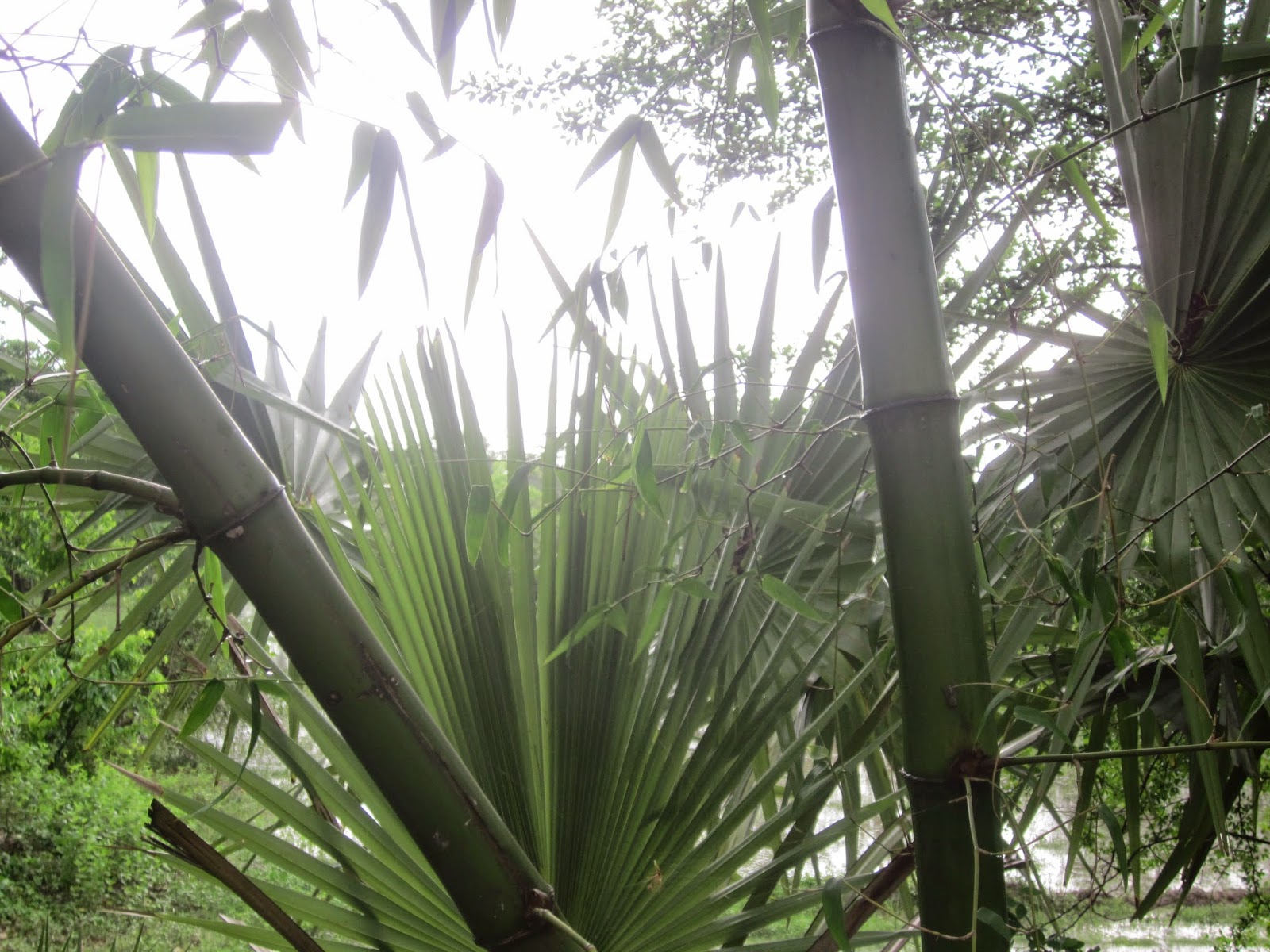

After the rain comes the sun.


Me in modern Dhaka panjabi.


This article published in Star Magazine, here: My Islam.


Thursday, 26 June 2014

An Afternoon with Father Alex

Father Alex.


We meet him at the St. Andrew’s Parish Mission in Diglakona village of Jamalpur’s Bakshiganj. It’s occasional-wild-elephant country up that way, in the dreamy lower hills adjacent to the Meghalayan border. The villagers are harvesting cassava. It’s a sunny afternoon.

There’s a shady sitting place in the grounds and we wait. After a few minutes Alejandro Rabanal, better known as Father Alex, wanders down. He’s sporting a bright orange t-shirt and casual trousers – formal attire is hardly a daily affair in Diglakona. His hair is grey yet his face looks surprisingly fresh and untroubled by time. It’s only as he starts to speak of his experiences that it truly becomes apparent that his age – well, it’s not nice to ask – is a fair bit closer to requiring three digits than it is to needing only one.

Getting there along the narrow country roads in from Bakshiganj town has been a pleasant journey, but not altogether short. Still, Father Alex’s Bangladeshi journey was a great deal longer: from his home in Pangasinan of north Luzon in the Philippines he first arrived in Barisal in the then East Pakistan, in 1959.

“I was surprised,” he says of his first impression, “by how much water there was. There were rivers, water... everywhere.”

Mandi students at the Diglakona mission school.

The church and school at Diglakona cater to the scattered twelve villages of the ethnic minority Mandi, who are commonly called Garos by outsiders. Communications between the villages isn’t easy so there’s a girls’ hostel and a boys’ hostel where the 49 young students board while completing their primary years under the guidance of three teachers. The school is called Sal Gital, meaning “New Light” in Mandi.

“We have two of our former students in Dhaka University,” Father Alex says proudly, “but it’s only a small percentage of students who can pursue higher education, mostly due to money problems.” He is passionate about education.

Father Alex conducts morning and evening prayers in the chapel, and confession. The students and local community have taken to calling him Acchu, which means grandfather.

Of course the Mandi community is itself no stranger to long journeys. According to oral tradition it was around 400 BCE when their ancestors under the leadership of Jappa Jalimpa, having left Tibet first crossed the Brahmaputra River to settle in Meghalaya’s Garo Hills. From there the civilisation spread to include villages in the lower hills and southern plains, in areas that are now Bangladesh.

The rivers and hills of both history and geography conspired to bring divergence to that civilisation. For one thing, several dialects developed in the common language. The term Mandi comes from the southern A’beng form of the language found in the plains and means ‘human being.’ Nowadays it describes the ethnic group throughout Bangladesh, be it in Tangail’s Modhupur, Netrakona, Mymensingh or Jamalpur. The northerners in Meghalaya are meanwhile described as A’chik mande, literally ‘hill people’ in the A’chik dialect, by Bangladeshi Mandi.

A local Mandi villager taking a break outside the mission gate.

Father Alex’s journey didn’t start with the Mandi – he first met them in 1972 when he accepted a position in Galchatra village of Tangail’s Modhupur, where he would stay for the following twenty-two years. Yet the Mandi have been a great influence. It is due to them he decided to join the priesthood in 1988.

Speaking of his arrival in this part of the world, Father Alex recalls, “I came to serve. It was my main aim. I came to help the poor, which I could not do as a university professor in the Philippines.”

The opportunity arose from a Canadian Catholic Brother who had been a prisoner of war in the Philippines in World War Two. From that time he had established connections with the president of the university where Father Alex had commenced his career. The Canadian Brother was supposed to take a position in Barisal to teach improved agricultural methods to primary and high school students, with the view that many would later run their family farms. However, the Canadian Brother found he couldn’t adjust to Barisal’s climate and he approached his friend, the university president, to find a volunteer to take his salary and go in his place. Father Alex raised his hand.

“The students were very receptive,” he says of his initial three years in Barisal. “We were able to help them improve their farming methods.” At the end of his term and the project’s funding, Father Alex returned to the Philippines. But he must have been popular because just three months later he was asked to return.

“Bangladesh has changed a lot since those days,” Father Alex says, “For one thing, the population has doubled.” Asked why he committed to stay in Barisal into the 1970s he says, “They wanted me to stay. They loved me. We succeeded in that way. In any case what I liked and didn’t like was never the focus. I came to serve.”

To this day Father Alex admires the devoutness of Bengali Muslims. “I appreciate how regular they are in their prayers.” Likewise he thinks highly of the Muslim attributes of politeness and respect. “Even the children always greet you with an assalamu alaikum.”

Yet in 1972 providence led him to accept a position in Modhupur. “I felt at home soon after I arrived,” he recalls, “I found that Mandi culture is not far from Filipino culture. Men and women mix freely. There is no malice. They joke with each other. I like how they work together including in the field when sowing or harvesting rice. Segregation is not there.”

Mandi villagers outside the mission gate.

He was impressed by Mandi hospitality. “No matter how poor a family is, they will treat guests with a big reception. They can borrow at least two days’ labour wages to buy chicken and other food.” 

“And especially if they offer rice wine,” he adds with a laugh, “Then the hospitality is even better!” What he’s not so keen on, however, is the pungent shutki-like dried fish dish called nakam.

Father Alex also points to the Mandis’ strong sense of community. “One family I know,” he narrates, “Has eight children and they took in one more because that child’s family was struggling. It’s the maternal uncle’s duty to help out if the family is poor.”

Father Alex’s description is a far cry from how the Mandi have been described in the past. Both invading Mughal armies and the British were fearful. From around 1800 accounts describe them as ‘bloodthirsty savages’ and they had a reputation as headhunters, with a Mandi man’s status determined by the number of heads he owned. But of course the narratives of conquerors often serve their own purpose. It is likely much of the Mandis’ reputation arose as a result of their willingness to vigorously defend their lands from the invaders.

Indeed the Mandi have inherited a sophisticated matrilineal culture and had a well-developed religion which is sometimes underestimated as a form of animism, called Songsarek. Unlike many of the minority religious beliefs of India, Songsarek developed separately from Hinduism. Traditionally the Mandi believed in reincarnation but not caste.

From the 1860s however, the Mandis’ journey brought to them Christianity. “The Baptists were the pioneers,” says Father Alex. By the 1970s belief in Songsarek in Bangladesh had begun to dramatically decline. Nowadays nearly all Mandis profess Christianity, with Catholics comprising the largest denomination.

Father Alex believes the biggest contribution the Catholic Church has been able to make, for the Mandi and in Bangladesh, is in the provision of education. “It’s the best thing we have done,” he says. Another milestone in the Mandis’ journey was the Vatican II changes approved in Rome in 1965. These changes allowed for mass to be given in local languages rather than Latin, and led to a new approach to local cultures which had previously been discouraged.

“The people were very receptive,” Father Alex says of the implementation, “When we started to use local language in songs, when they understood what they were saying...” In Diglakona he gives the mass in Mandi.

Another change he has witnessed has been a decline in the Mandis’ penchant for a semi-nomadic lifestyle. “Since the forests became occupied and available land was less they stopped moving so often. Still they will move within the community, but not to new areas like before.”

By the late 1980s the funding for his position in Madhopur had dried up. “But I could see that they still needed me,” he said. “I decided to do more.” With this in mind, to facilitate his continued goal of service, he joined the priesthood. It was the decision that would bring him, ultimately, to Diglakona.

Asked what has been most difficult about living in Bangladesh he says, “The languages are very hard – Bengali more so than Mandi. It’s so difficult to find a proper teacher. I was always asking children and studying myself. And don’t ask me to write Bangla!”

Asked what he misses about the Philippines his answer is simple: the beer! And with a good Spanish name like Alejandro he certainly shares something in common with the delicious and world renowned Filipino national brew, San Miguel.


Mandi villagers making bamboo fence for the mission.


The author with Father Alex and mission staff members.


This article is published in Star Magazine, here: An Afternoon with Father Alex