Showing posts with label economy. Show all posts

Thursday, 28 May 2015

A Little Southeast Asia in Bangladesh


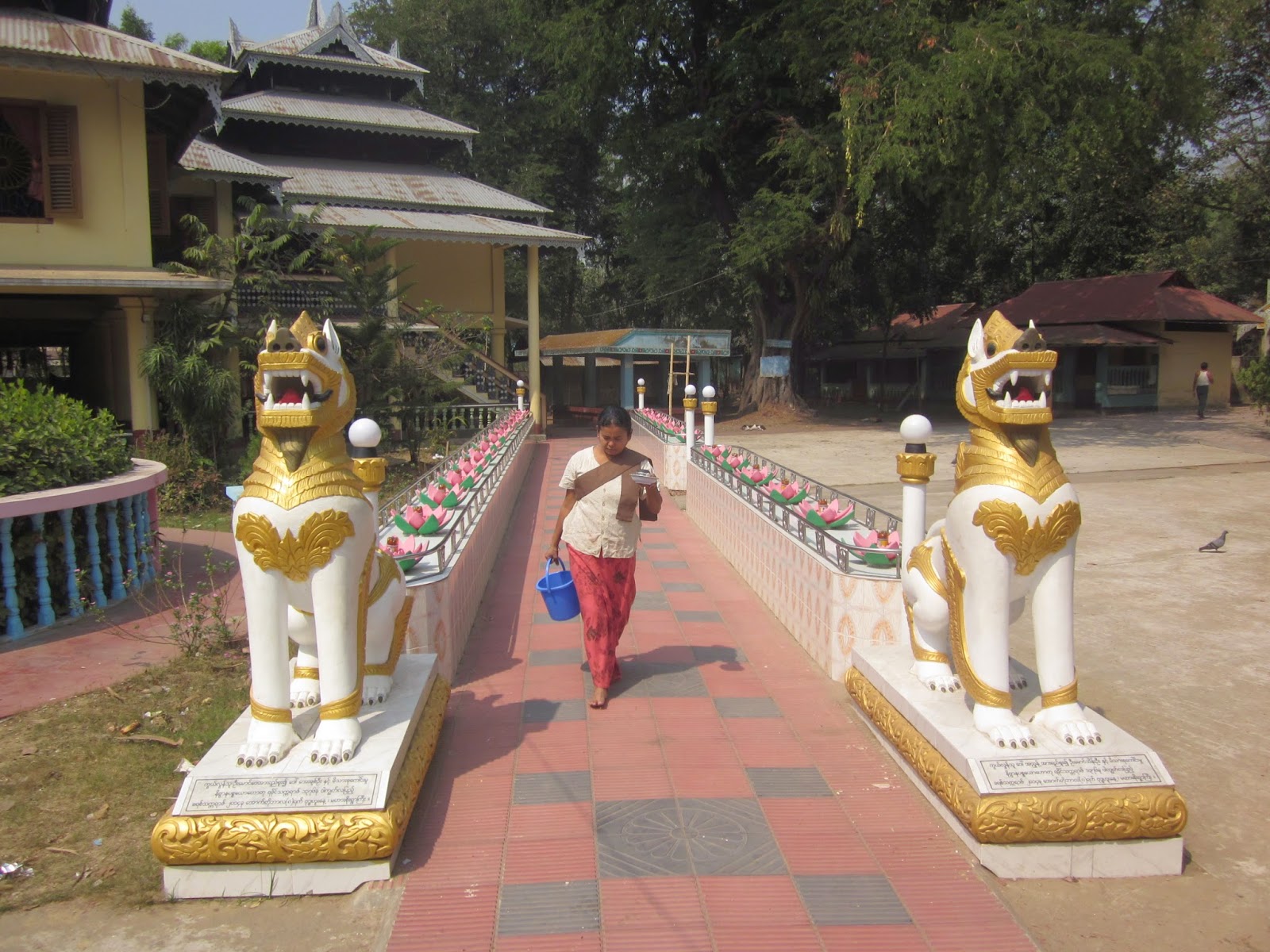
Entry to the Buddhist temple complex in Moheshkhali's Rakhine Para.

To venture into Rakhine Para of Moheshkhali Island’s Gorakghata is to step into Southeast Asia. It’s not only the Buddhist temple complex, glittering in gold, or the Rakhine faces of residents. In the back alleys the faded frilly facades of some of the old apartment blocks could, to the newcomer, easily belong in suburban Rangoon. There are examples of beautiful wooden homes perched on stilts, where family and friends relax beneath, chatting and taking advantage of the architectural shade. Rakhine Para evidences a diverse Bangladesh.

Detail from the temple complex.


It feels like a neighbourhood where life returns in familiar patterns with each dawn, year after year. But to speak with Kyaw Ching, a retired petty naval officer and area resident, in his goldsmith and pawnbroker’s, is to appreciate that the Rakhines have adopted contemporary ways.

It used to be that the Rakhine community primarily engaged in fishing. Ching’s father had four sailing boats for the purpose; but nowadays in the whole community it’d be difficult to find one.


At the temple, Rakhine Para.


“Fishing was dangerous,” says Ching, a father of three. “Many people died. There’s hardly a family in the village where someone didn’t die at sea.” Over a decade ago the last of Moheshkhali’s Rakhine fishing nets were stowed for a final time.

For Rakhine women economic activity also changed. “Our women don’t sit down,” says Ching, “They like to help support the family and there used to be a handloom in every house. But there are no handlooms now.”


Kyaw Ching with his wife in their goldsmith and pawnbroker business office in Gorakghata's Rakhine Para.

Cost increase in the price of cotton and low retail rates for finished items made the area’s longstanding weaving tradition unviable. These days while local women still try their hand at sewing, the distinctive Rakhine textiles sold in the market opposite the temple are imported from Cox’s Bazar or Myanmar.

One of the temple buildings in Rakhine Para.

Change has also come to education. Whereas earlier not every child attended school they now do; yet the younger generation is losing touch with the Rakhine language, especially the ability to read its Burmese script. “We used to have a Rakhine teacher,” says Ching, who explains the difference between the Burmese and Rakhine languages as akin to the difference between Chittagonian and standard Bangla. “I wish the government could make provision for a teacher.”

Local Rakhine women still wear traditional thamis.


Formerly known as Arakanese, Rakhines trace their heritage to the establishment of the first independent Rakhine kingdom by King Marayu in 3325 BCE at Dhanyawadi northeast of Myanmar’s Sittwe. It is said that Gautama Buddha visited the civilisation during his lifetime. 


Subsequent centuries saw the Rakhines establish a prosperous trading society that stretched into modern day Chittagong Division and beyond, along the shores of the Bay of Bengal. With British documents to demonstrate their long-established local presence, the approximately 3,000 Rakhines living in six Moheshkhali villages are considered indigenous to the island.


Rakhine women relaxing in the shade under a traditional stilt house.


In place of traditional livelihoods a younger generation of Rakhines have become technicians, mechanics and master tailors. Goldsmith shops and pawnbroker businesses are prominent.

A home in traditional Rakhine style.


“A few have taken government jobs,” says Ching, who had some work to do to convince his parents decades back to let him sign up to the Bangladeshi navy where he worked for twenty years. “They thought of war and worried,” he says, “but afterwards they came to accept it.”

The Rakhines often favour business they can carry out close to home, fearing discrimination if they embark on lucrative ventures further afield. “It’s for safety,” says Ching, “We cannot easily spread out because we don’t have a strong position.” Yet he is the first to acknowledge Rakhines face no difficulties in Moheshkhali.


Temple building in Rakhine Para.


While modernity has brought change to Rakhine daily life, other aspects remain the same. Women still favour the Burmese sarong-like thami while among Rakhine men the signature longyi (lungee) tied with a prominent knot at the front and worn with shirt tucked in, is ubiquitous. And at mealtimes of crab, fish or meat with vegetables it can come as no surprise to detect the wafting aroma of the signature shrimp and chilli paste called napi, which also forms part of the cuisine of some hill tracts peoples.


Nowadays Rakhine textiles are imported from Myanmar.


This article is published in The Daily Star, here: The Changing Traditions of Moheshkhali's Rakhines


Temple view, Rakhine Para, Moheshkhali.


Saturday, 30 August 2014

VF Traveller: Atomic Itching

VF Traveller takes Village Flute beyond Bangladesh and out into the world. Here, aspiring and established writers and photographers can present a village that is special to them, in their language, from their perspective, from their neck of the woods...
---------------------------------------------------------------------------------------------

Featured village: Belene, Bulgaria. 
By Sellek Daniel
In English and Bulgarian. / На английски и български.


The mosquito infested Danube is not the place for swimming. / Пълна с комари, реката Дунав, не е място за плуване.


Socialist Party party. / Купон на Социалистическата партия.


Atomic Itching
Belene, Bulgaria.
May 24th, 2014.

Under the summer sun, by the Danube River, lies a town that has been the victim of political failures and plain lies: Belene. This place used to be known for an island where a former concentration-camp was established to keep the “enemies of the nation” far from the communist party’s eyes. Now it is recognized for a controversial project started by the same political party: a nuclear power plant.

The ordinary, "everyday-ness" of the town couldn’t feel more distant from its ominous fame. There are gardens where tomatoes, cucumbers and peppers grow, kids play in the streets and many pensioners go about their routines without much care. The only conspicuous absence is that of older students and middle aged workers who have left in search of a better life, like many others before them.

NEK local HQ / Местния щаб на НЕК.
Gergana Ivanova (not her real name) is one of those who unwillingly left her home town due to a lack of opportunities. She graduated with an electrical engineering degree on the conviction that she could go back to work at the nuclear power plant. That was not going to happen. The construction of the Belene NPP started in 1987 and was stopped and restarted on several occasions, depending on the political weather and the mood of the government of the day. This has meant that after more than 25 years of work there is nothing really working on the site.

“That used to be a creamery” said a man who, while I was looking at one of the several abandoned buildings, passed by on a horse-drawn cart. “The communists destroyed it. They made good cheese” were the last words I could hear from him as he pulled away too far to hear more of his pro-democracy speech.  


The ghost Russian enclave. / Анклават на Руските призраци..
In the past the town was divided by religious denominations: the eastern-orthodox and the roman-catholic denizens lived in separate boroughs along the river. Today they’re closer and even tighter in relationship thanks to their dislike for “the reds”. That’s the situation until the socialist party comes around to give free beer and music the day before the European Parliament elections. 

Biofuel. / Биогориво.


But the truce doesn’t last long enough to help the former rulers as they are defeated at the polls. Not even the promise to restart, once again, the construction of the nuclear power plant helped their plea.

Walking through the city, passing by old iconography, old advertisements, old people and old promises, a feeling of despair starts to grow in the presence of the innumerable mechanical eyes that guard the city. Lots of surveillance cameras sprout from walls, columns, beams, anywhere that can bear their weight. It is rather an odd find for a town where almost nothing happens. 

Maybe it is just the custom, though it is not easy to forget that in this town a high-security prison and a Nuclear Power Plant in the making share both mayor and name.

Big brother in Belene. / Big brother в Белене.


As night falls, hordes of mosquitoes invade the town, attacking from the river, exchanging blood for the imperative need for scratching. These animals give the decision of installing a prison on an island in the middle of the river a sadistic touch. But while Belene’s inhabitants have to live with this micro-violence all the time, anyone with a choice leaves, looking for higher ground. That is the story of the ghost town by the prison, a residential complex built by Atomstroyexport to house employees working on the project, the same people who after the suspension of tasks have left town. 

Belene NPP 'Energy for the Future' ad. / АЕЦ Белене "Енергия за бъдещето".


Nevertheless, not everyone is as pessimistic. The NEK (National Electricity Company) still has advertising on the project at the entrance of its building located in the town centre, and in the same area the Worley Parsons office is working. 

Both companies are still waiting for a new government to review the project. Both companies are waiting for a bit of populism to go their way and so, they continue scratching their bitten skin as they build the slowest progressing NPP in the world.

----------------------------------


The Danube River at Belene, Bulgaria. / Река Дунав при Белене, България.


The new socialists. Vote for us! / Новите социалисти. Гласувайте за нас!


Атомният сърбеж
Белене, България.
24 май, 2014.

Под лятното слънце, край река Дунав, се намира един град, който е бил жертва на политически провали и всекидневни лъжи: Белене. Това място е известно, заради бивш концентрационен лагер, установен на един остров, за да държи "враговете на нацията" далеч от очите на Комунистическата партия. Днес градът е познат заради един спорен проект започнат от същата политическа партия: Атомна Електроцентрала Белене.

A church, Belene. / A църква, Белене.
В града, всекидневието не може да се чувства по-отдалечено от неговата зловеща слава. Има градини, където домати, краставици и чушки растат; деца играят по улиците и много пенсионери се занимават с рутината си без много грижи. Единствената видима липса са  по-големите ученици и работниците на средна възраст, които са напуснали града в търсене на по-добър живот, както и много други преди тях.


A church in Belene. / A църква в Белене.


Гергана Иванова (не е истинско й име) е една от тези, които неохотно напусна родния си град, поради липса на възможности. Тя завършва електротехника с убеждението, че ще може да се върне за да работи в централата; това несе случи. Изграждането на АЕЦ Белене започва през 1987 г. и е било спряно и рестартирано няколко пъти, в зависимост от политическия климат и настроение на правителството в момента. Това означава, че след повече от 25 години работа, нищо не работи наистина на строителната площадка.

"Това беше една мандра", каза човек, който, докато гледах една от няколкото изоставени сгради, премина върху теглена от коне каруца. "Комунистите я разрушиха . Те правеха добро сирене" бяха последните думи, които чух от него, тъй като той се отдръпна твърде далеч, за да чуя още от продемократичната му реч. В миналото градът е бил разделен от религиозни деноминации: православни и католици са живели в отделни квартали по поречието на Дунава. Днес те са по-близо и дори обединени във взаимоотношенията си благодарение на тяхната неприязън към "червените". Това е положението, докато социалистическата партия не се появи наоколо, за да даде безплатна бира и музика в деня преди изборите за Европейски парламент. Но примирието не продължава достатъчно дълго, за да помогне на бившите управници, тъй като те са победени на изборите. Дори и обещанието да се рестартира, за пореден път, изграждането на централата не е помогнало на тяхното искане.


Belene still waits for its power plant. / Белене е все още чака своята централа.


Разхождайки се през града, минавайки покрай стари иконографии, стари реклами, стари хора и стари обещания чувството на отчаяние започва да расте в присъствието на безброй механични очи, които пазят града. Камери безчет поникват от стени, колони, греди, върху всичко което може да понесе теглото им. Това е доста странно откритие за един град, където почти нищо не се случва. Може би това е просто обичай, може би не е лесно да се забрави, че в този град, затвор и АЕЦ споделят както един кмет, така и едно име.

Under surveillance. / Под наблюдение.


Когато нощта пада, орди от комари нахлуват в града, атакувайки от реката; те обменят кръв за наложителната необходимост за чешене. Тези животни дават, на решението за инсталиране на затвора на остров в средата на реката, един садистичен усет. Но докато жителите на Белене са принудени да живеят с това микро-насилие през цялото време, всеки, с възможност за избор напуска, търсейки по-висока земя. Това е историята на призрачния град в близост до затвора, жилищен комплекс, построен от Атомстройекспорт за разполагане на служители, работещи по проекта,същите хора, които след спирането на задачите са напуснали града. Въпреки това, не всички от тях са толкова песимистични. НЕК (Национална електрическа компания), все още има реклама по проекта на входа на своята сграда, разположена в центъра на града и офиса на WorleyParsons работи в същия район. Все още са в очакване на ново правителство, което да преразгледа проекта. Те са в очакване от малко популизъм да желае техните гласове за да продължат да чешат ухапаната си кожа докато изграждат най-бавния АЕЦ в света.


Old socialist insurance company ad on a building. / Стара реклама за една застрахователна компания.
Welcome to Belene! / Добре дошли в Белене!


About the author & photographer: Sellek Daniel, currently works with Agentur Schwimmer in Bulgaria.
За автора и фотографа: Селек Даниел, който в момента работи с Агенцията Швимер в България.